
Dolomites & Mountain Weddings
How Much Does a Dolomites Wedding Photographer Cost in 2026?
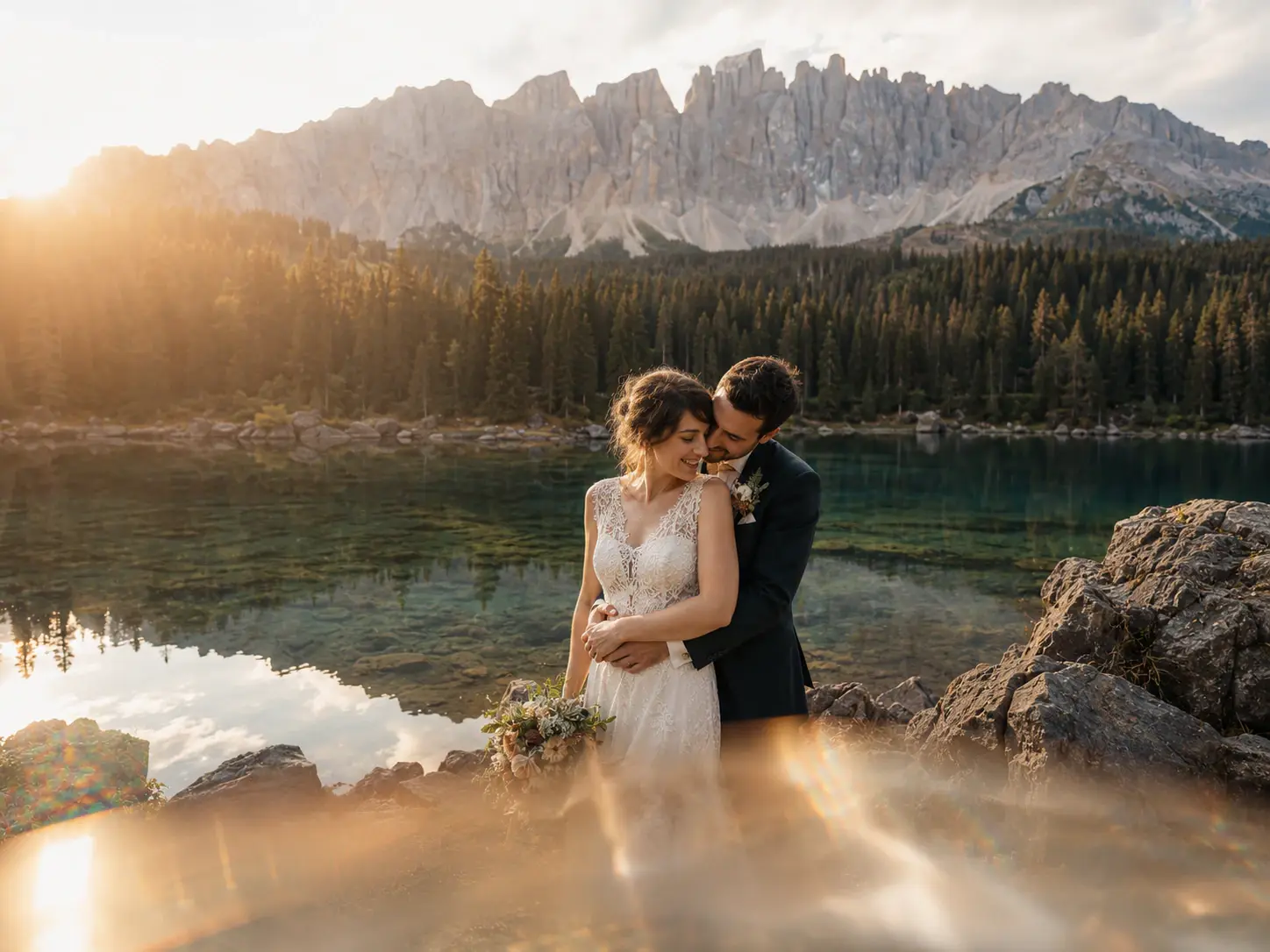
If you are planning a wedding in the Dolomites, one of the first practical questions is usually simple:
How much should we expect to invest in photography?
For professional photography in the Dolomites, couples may see prices from approximately €900–€2,000 for one or two hours, €1,600–€3,500 for three or four hours, €2,500–€5,000 for around six hours and €3,500–€6,500 for a full wedding day. Extended or multi-location coverage may reach €4,500–€8,000 or more.
These figures refer to photography coverage, not the complete cost of a Dolomites wedding or elopement. Film, additional events and multi-day celebrations require a separate comparison because the team, time and deliverables are different.
The reason prices vary so much is that a Dolomites wedding can be many different things. It might be a short civil ceremony, a quiet mountain elopement, an intimate dinner with family or a full destination wedding with guests travelling from abroad.
Each one needs a different kind of coverage, and the mountains add their own rhythm to the day.
If you are still deciding where your celebration might happen, our guide to the best Dolomites wedding venues can help you understand which locations keep the day concentrated and which may require more time.
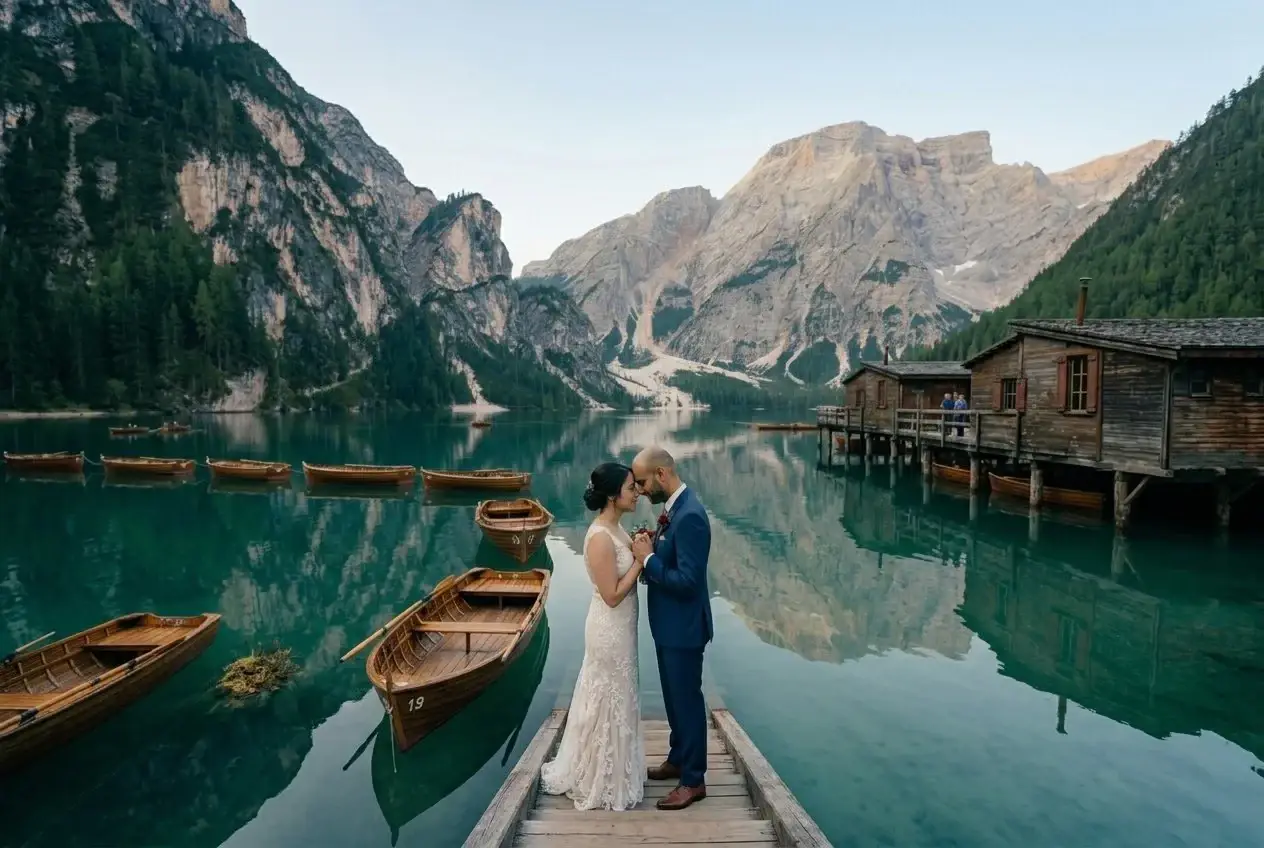
Why Dolomites wedding photography quotes vary
A wedding in the Dolomites is different from a wedding where everything happens in one building or one city venue.
The mountains bring beauty, but they also bring logistics. Your day may involve mountain roads, parking limitations, cable cars, walking distances, changing weather, earlier shade in the valleys or travel between a hotel, ceremony location, portrait area and dinner venue.
This does not mean your wedding needs to feel complicated. It simply means the timeline needs space.
Access and movement between locations
A celebration centred around one hotel or venue is normally simpler to photograph than a day involving several valleys or mountain areas.
Cable-car timetables, seasonal openings, restricted roads, parking and walking time can all influence the amount of coverage needed. Travel between locations may also happen within the contracted photography hours, so this should be clear before comparing proposals.
A beautiful viewpoint that takes an hour to reach does not become part of the wedding without using part of the day.
Light and weather
Light changes quickly in the mountains. A location may lose direct light earlier than expected because of the surrounding peaks, even when sunset is still some time away.
Weather can also change the order of the day. A calm plan usually includes enough flexibility to move portraits, choose an accessible alternative or allow the celebration to continue without making photographs the centre of every decision.
Our guide to the best time for wedding photos in the Dolomites explains the differences between seasons, daylight and mountain conditions in more detail.
Date and demand
The wedding date can affect availability and price. During the most requested periods, some photographers may require longer minimum coverage or reserve shorter collections for weekdays and quieter dates.
Contacting photographers early is particularly helpful if your plans depend on a specific weekend, a combined photography and film team or coverage across more than one day.
Travel, accommodation and team size
Travel and accommodation may be included, calculated separately or confirmed after the locations are known.
The quote may also change when the day requires another photographer, a dedicated filmmaker or an assistant. What matters is understanding who will be present, how long each person will work and what each part of the team is responsible for.
How many hours of photography do you need?
The right number of hours depends less on the size of the guest list and more on the shape of the day.
A wedding with twelve guests can still need a full day of photography if preparations, ceremony, portraits and dinner happen in different places. A larger celebration may need fewer hours if everything happens at one venue.
A short ceremony at one location
One or two hours may be enough for a simple civil ceremony followed by family photographs and a short portrait session nearby.
This works best when access is straightforward, everyone is already together and there is no travel between the ceremony and portraits.
An intimate wedding or elopement
Four to six hours can work well when you would like preparations, ceremony, family moments, portraits and part of the gathering documented.
If the plan includes a cable car, a walk or another mountain area, the travel time needs to be included honestly. A small wedding does not automatically mean a short photography timeline.
For complete location, permit, guest and weather planning, see the Dolomites elopement planning guide.
A full wedding day
Around eight hours often allows the story to begin with preparations and continue through the ceremony, portraits, aperitivo and part of dinner or the speeches.
Ten or twelve hours may make more sense when preparations begin in different places, the ceremony and reception are separated or you want both the quieter beginning and the evening atmosphere preserved.
Split or multi-location coverage
Some couples imagine photographs at sunrise, time with their guests during the day and another portrait session close to sunset.
This can be beautiful, but it is not the same as one continuous block of coverage. Ask how breaks, additional travel and split hours are treated before assuming they belong to a standard collection.
The landscape needs time. But that time should support the wedding, not turn it into a tour of locations.
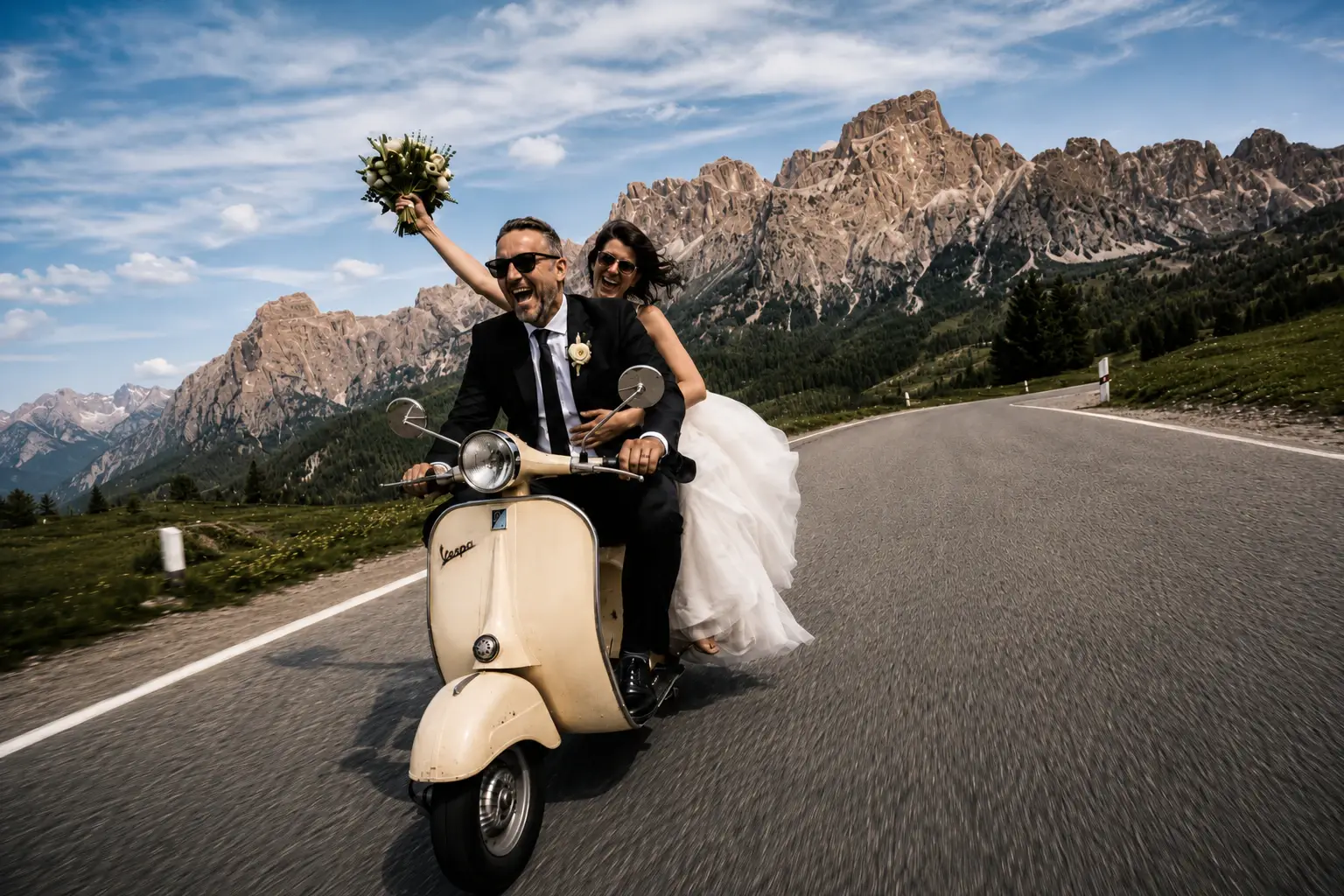
What is usually included—and what may be additional?
There is no universal Dolomites wedding photography package, but professional collections commonly include:
- a planning conversation and a defined number of photography hours;
- editing and high-resolution digital photographs;
- a private online gallery;
- a stated delivery window.
Timeline guidance, preview photographs, albums, engagement sessions and another photographer may be included or offered separately.
Travel, accommodation, VAT, cable-car tickets, parking, venue access charges, location permissions and additional events should also be confirmed rather than assumed.
If drone footage is offered, it remains dependent on the location, current regulations, permissions, weather and an appropriately qualified operator. Usage and printing rights also vary between contracts, so the proposal should explain how you may download, share and print the finished photographs.
Photography, film and multi-day coverage
Photography and film require different people, equipment, audio, editing and deliverables.
When both are important, a coordinated team can make planning simpler. The photographer and filmmaker can discuss movement, ceremony positioning, audio and portrait time together, which helps them work around one another without making the day feel crowded.
That does not mean the wedding needs to become a production. A smaller celebration may need only a photographer and a dedicated filmmaker. A larger or multi-location wedding may need additional people to cover moments happening at the same time.
When comparing photography and film proposals, check how many photographers and filmmakers will be present, how many hours each person will cover, whether ceremony and speech audio are included, what kind of film will be delivered and whether travel and accommodation cover the entire team.
Drone footage remains dependent on current rules, permissions, weather and location. Film, welcome dinners, next-day sessions and complete wedding weekends should be treated as their own scope rather than added to a photography range without explanation.
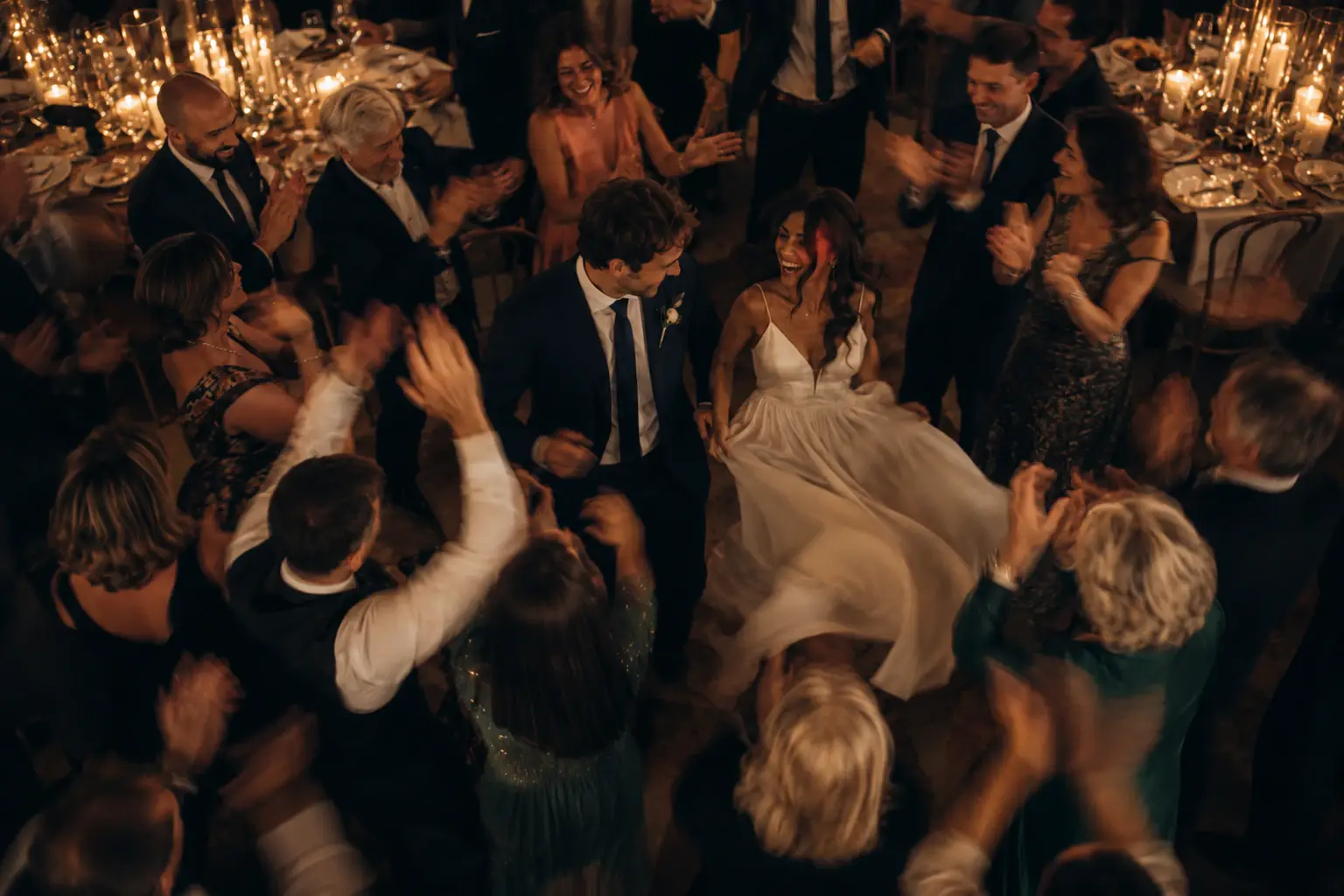
How to compare Dolomites wedding photography proposals
Two proposals may both include eight hours and still describe very different services.
Before comparing totals, check:
- whether travel time between wedding locations counts within the coverage;
- whether VAT, travel and accommodation are included;
- whether cable cars, parking or access costs are additional;
- who will photograph the wedding and whether another photographer is included;
- how many edited photographs are expected and whether previews are delivered;
- the final delivery time and backup arrangements;
- how overtime or changes of location are handled;
- what happens if weather or access affects the original plan;
- whether albums, film or additional events are included.
Price matters, but so does whether the proposal fits the wedding you are actually planning.
The goal is not to force dramatic portraits or move through as many locations as possible. It is to give the day enough room for real moments to happen naturally—and to preserve what it actually felt like.
How to choose value, not just price
When comparing Dolomites wedding photographers, it can be tempting to look only at the number of hours and the final price.
But those numbers do not tell you how the coverage will fit the day, how thoughtfully the mountain logistics will be handled or how consistently the photographer tells a complete story.
The real value is in the combination of experience, preparation and the work itself. Look at complete galleries rather than only a small selection of favourite images. Notice how the photographer approaches changing light, weather, movement, family moments and the quieter parts of the celebration.
A photographer familiar with destination weddings in the mountains should be able to help create enough space in the timeline without turning the wedding into a tour of locations. They should know when guidance is helpful and when the moment is better left uninterrupted.
This matters even more if you do not feel comfortable in front of the camera. Many couples want beautiful photographs, but they do not want their wedding to feel like a performance.
Our approach as a Dolomites wedding photographer is documentary and gently guided: present when direction helps, unobtrusive when the moment is already happening.
The goal is not to create a perfect-looking version of the day. The goal is to preserve what it actually felt like.
Final thoughts
So, how much does a Dolomites wedding photographer cost?
For many couples, professional photography will fall somewhere between €2,500 and €6,500, depending on the length and shape of the celebration. Short coverage at one accessible location may cost less, while extended hours, several mountain areas, split sunrise-and-sunset coverage or a larger team may move beyond that range.
But the best starting point is not only asking what photography costs. It is asking what parts of the day you want to remember.
Do you want the quiet getting-ready moments? The mountain ceremony? Your families arriving and seeing the landscape for the first time? A relaxed portrait session? Aperitivo, dinner, speeches or the feeling of the place after sunset?
Once you know what matters most, it becomes easier to understand how much coverage you need—and whether the proposal in front of you truly fits the day you are planning.
If you are still shaping the celebration, continue with the best Dolomites wedding venues, the Dolomites elopement planning guide, the guide to the best time for wedding photos in the Dolomites or the comparison between a Dolomites wedding and a Lake Como wedding.
Dolomites wedding photographer cost FAQ
Frequently asked questions
How much does a Dolomites wedding photographer cost in 2026?
Couples may see approximately €900–€3,500 for short photography coverage, €2,500–€5,000 for around six hours and €3,500–€6,500 for a full wedding day. Extended, split or multi-location coverage may reach €4,500–€8,000 or more, depending on travel, access, team and deliverables.
Are travel and accommodation included?
Sometimes, but not always. Some photographers include travel within a defined area, while others quote mileage, accommodation, flights or additional travel days separately.
Compare the final proposal rather than assuming the first price includes every location.
Do cable cars, parking or permits add to the price?
They can. Tickets, parking, restricted access, venue charges or location permissions may be additional. Requirements vary by location and season, so they should be confirmed once the wedding area and timeline are known.
What happens if weather closes the planned mountain location?
The contract and planning process should explain how weather and access changes are handled. A realistic plan may include an accessible alternative, a change of timing or portraits closer to the venue, but no photographer can guarantee that a particular mountain location will remain open.
Is sunrise or sunset coverage priced separately?
It depends on whether the photography is continuous or divided into separate parts of the day. Sunrise followed by a long break and later wedding coverage may be treated as split coverage rather than a standard consecutive-hour collection.
When is a second photographer useful in the Dolomites?
Another photographer can be useful when preparations happen in different villages, the ceremony has access restrictions or important moments occur at the same time. It is not automatically necessary for every intimate wedding; the locations, guest count and timeline should determine whether it adds real value.
Dolomites photography & film
Planning your Dolomites wedding photography?
You do not need to know exactly how many hours you need before getting in touch.
Tell us your date or season, location or shortlist, approximate guest count, whether the celebration moves between locations and whether you are considering photography only or photography and film. From there, we can help you understand what kind of coverage fits the rhythm of the day.