
Dolomites & Mountain Weddings
Dolomites Elopement Planning Guide
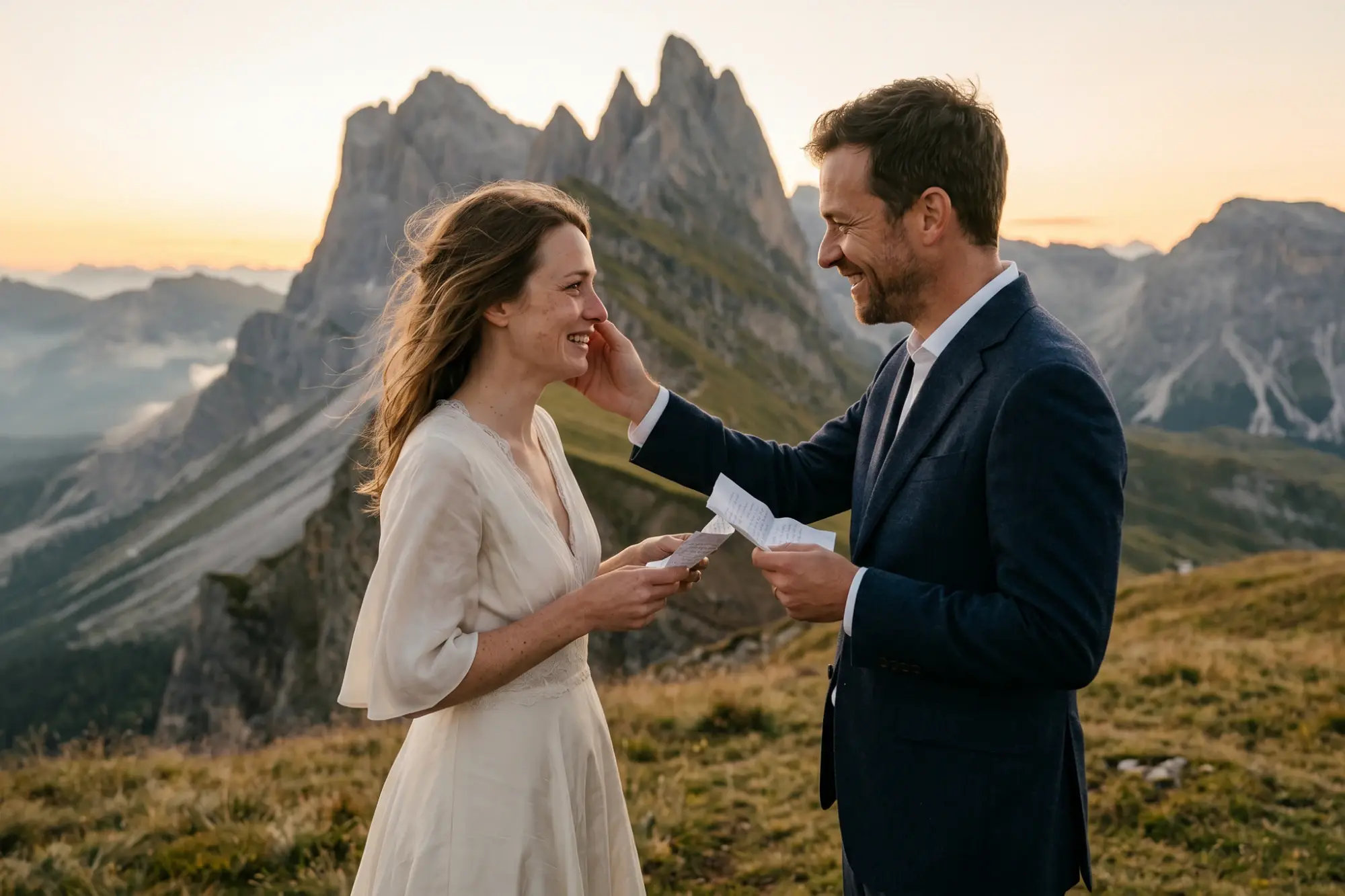
The Dolomites reward intention. A sunrise vow exchange on a quiet ridge can feel almost unreal, but the difference between peaceful and stressful often comes down to planning the small things well. This Dolomites elopement planning guide is for couples who want the experience to feel intimate, beautiful, and genuinely like them - not like a rushed photo shoot in a crowded place.
Eloping here is not just about choosing a dramatic backdrop. It is about building a day that feels calm from start to finish, especially if you are traveling from abroad or already know you do not love being the center of attention. The right plan gives you space to be present, move at a comfortable pace, and actually enjoy where you are.
What makes a Dolomites elopement different
The Dolomites are stunning, but they are also alpine, seasonal, and highly variable. Two locations that look close on a map can require very different logistics. One may be easy to access with a short walk, while another needs a cable car, a timed drive, or a hike that feels very different in wedding attire.
That matters because the best elopements here are designed around experience, not just scenery. If you picture a slow morning, a private first look, a short walk to your ceremony spot, and dinner in a mountain hut, your plan should support that rhythm. If you want to hike at dawn and say your vows with no one around, that is possible too, but only if the timing, weather window, and fitness level are considered honestly.
There is no single perfect way to elope in the Dolomites. There is only the version that feels most natural for the two of you.
Start with the season, not the location
Many couples choose their dream viewpoint first and then discover it is inaccessible, crowded, or completely different in the month they planned to travel. A better starting point is the season.
Late spring can be beautiful, but higher altitude areas may still have snow, and some roads, cable cars, or mountain huts may not be fully operating. Summer brings long days and easier access, though popular spots can become busy quickly. Early fall is often especially appealing because the light is softer, the temperatures are more comfortable, and the landscape still feels alive without peak summer traffic. Late fall becomes quieter, but access narrows. Winter can be magical, though it shifts the entire experience toward snow logistics, cold-weather planning, and fewer location options.
If privacy matters most, sunrise on a weekday is usually your friend in any high-demand season. If comfort matters more than dramatic adventure, aim for months with stable weather and easy access rather than pushing into the shoulder season just for a specific look.
Choose a location that matches your energy
The most photogenic place is not automatically the best fit. Some couples want a cinematic mountain backdrop with minimal walking. Others want a more adventurous day with movement built into it. Be honest about what feels exciting versus what sounds good in theory.
Ask yourself a few practical questions. Do you want to be somewhere you can reach in formalwear without stress? Are you comfortable waking up very early? Would you enjoy a short hike, or would that make the day feel more like a task? Do you want privacy more than convenience?
In the Dolomites, these trade-offs are real. Easier access often means more visitors. More secluded views may require more effort or stricter timing. A beautiful meadow near a mountain hut can feel incredibly intimate without demanding a difficult trek, and for many couples that balance is exactly right.
If the private wooden boathouse and boats are central to your plans, use our dedicated Lago di Braies elopement guide for current session times, access and a realistic morning timeline.
Permits, ceremonies, and what is legally realistic
One of the biggest planning questions is whether to make the elopement legally binding in Italy or to handle the paperwork at home and keep the day symbolic. For many international couples, the symbolic route is simpler and less stressful. It gives you more freedom with timing and location, and it removes a layer of bureaucracy that may not add much emotionally.
If having a legal ceremony in Italy matters to you, start researching early. Requirements vary depending on nationality, residency, and the type of ceremony. Civil ceremonies are typically tied to approved town halls or municipal venues rather than remote mountain locations.
For outdoor vow exchanges in natural areas, you may also need to check whether a permit or special authorization applies, especially for professional photography, set-up elements, or protected spaces. Rules can change by municipality, landowner, and season. Never assume that a popular photo location automatically allows ceremonies or styled set-ups.
## Build a timeline with breathing room
A relaxed elopement rarely happens by accident. It usually comes from a timeline that is not trying to squeeze too much into one day.
If you are getting ready in a valley town and heading up into the mountains, travel time can be longer than expected. Roads are winding, parking can be limited, and mountain weather may slow things down. Add buffer time everywhere. It protects your mood as much as your schedule.
A gentle timeline might include a slow morning together or separately, a first look near your hotel, travel to the ceremony location, time to settle before vows, portraits that feel more like a walk than a session, then a meal or quiet celebration. If you are planning sunrise, consider whether you would rather split the experience across two parts - for example, private vows at sunrise and dinner later that day or the next evening. That can make the whole experience feel lighter.
Weather is part of the story
In the mountains, weather is never just a background detail. It shapes access, visibility, comfort, and timing. A clear forecast can turn quickly, and low cloud can either create atmosphere or completely hide the view you hoped for.
The key is not trying to control it. It is planning with flexibility. Choose clothing you can move in and layer easily. Bring proper shoes even if you change into dress shoes briefly. Have a backup approach, whether that means adjusting the hour, shifting to a nearby sheltered area, or embracing a moodier version of the day.
Some of the most emotional mountain elopements happen in soft fog, light rain, or dramatic skies. The photos feel cinematic because the couple stayed present instead of fighting the conditions.
What to wear in a way that actually works here
The Dolomites are not a studio set. Wind, uneven ground, and changing temperatures are part of the experience, so your outfit should be both beautiful and practical.
For dresses, movement often matters more than heavy structure. Fabrics that catch the breeze photograph beautifully and tend to feel easier outdoors. For suits, think about layering and temperature changes between morning and evening. Neutral tones usually sit naturally against the landscape, though the best choice is still what feels like you.
Footwear matters more than most couples expect. Even accessible viewpoints can involve gravel, slopes, mud, or short trails. Many couples bring one pair for walking and one for the ceremony or portraits. That is not unromantic. It is smart.
Hair and makeup should also be planned for real mountain conditions. A style that survives wind and a bit of moisture will usually serve you better than something overly delicate.
Make the day feel personal, not just scenic
The mountains do a lot, but they should not do all the emotional work. The most meaningful elopements usually include a few intentional choices that make the day unmistakably yours.
That could mean reading private letters before your vows, sharing breakfast after sunrise, inviting just two close guests, booking a beautiful dinner, or staying overnight in a mountain rifugio. It could be as simple as choosing a ceremony script that sounds like your actual relationship rather than something formal and distant.
If you are camera-shy, this part matters even more. When the day has real texture and meaning, being photographed feels less like performing and more like living it. That is where the most natural images come from.
Choose vendors who understand calm
A Dolomites elopement has moving parts, but it should not feel complicated to you. The right vendors help create that feeling. They communicate clearly, know how to adapt, and never make the day feel like a production.
This is especially important for photo and video. If you already feel nervous in front of the camera, you want a team that gives gentle direction when needed and then steps back so the day can unfold naturally. Documentary coverage works best when there is trust, not pressure.
That is also why local or regionally experienced vendors can be so valuable. They often know how the light changes, when a location fills up, what travel times really feel like, and how to shift plans without causing panic.
A few mistakes to avoid
The most common mistake is overplanning the visuals and underplanning the experience. A second is choosing a location that looks perfect online but does not fit your pace, comfort level, or season. A third is expecting total privacy at famous spots without adjusting the timing.
Another issue is treating the elopement like a shortened traditional wedding. It does not need to follow that structure. If a first dance on a terrace at sunset feels right, do it. If cake cutting feels meaningless to you, skip it. The day gets better when it reflects your relationship instead of a checklist.
If you want support shaping a day that feels relaxed, intimate, and visually honest, WeddingStudio approaches Dolomites elopements with exactly that balance of calm guidance and natural storytelling.
The best plan is the one that leaves room for feeling. When you can breathe, look around, and stay close to each other, the Dolomites stop being just a dramatic backdrop and become part of a memory that feels fully lived.
Dolomites elopement photography
Planning your Dolomites elopement?
If you’re dreaming of an intimate mountain wedding day that feels calm, natural and deeply connected to the landscape, we’d love to hear what you’re imagining.
We can help you understand what kind of coverage makes sense for your location, light, weather, travel time and the moments you care about most, from quiet sunrise portraits to ceremony, mountain views, dinner and everything in between.