
Start Here
Italy Wedding Timeline That Actually Works
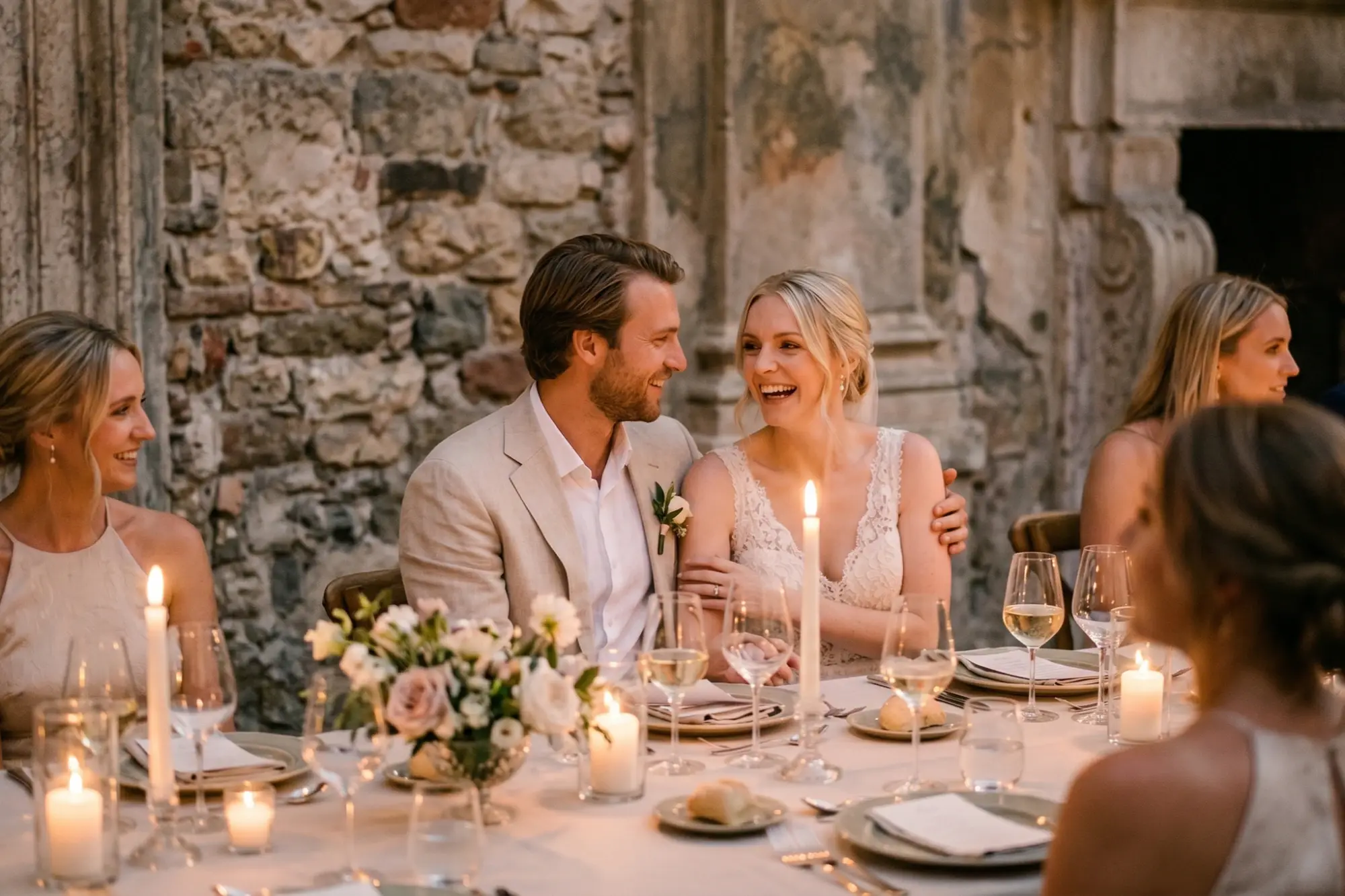
If you have started building your italy wedding timeline and it already feels tighter than you expected, you are not imagining it. Weddings in Italy often unfold more slowly, more socially, and more beautifully than couples first picture - which is exactly why the timeline matters so much.
The goal is not to control every minute. It is to create enough space for the day to breathe. That is what helps everything feel calmer in the moment and look more natural in your photos and film afterward.
Why an Italy wedding timeline needs more breathing room
One of the biggest surprises for destination couples is that an Italian wedding day often has a different rhythm than a fast-paced city wedding back home. People linger. Aperitivo stretches because guests are genuinely enjoying it. Dinner is an experience, not a quick transition to dancing. Venues may also be spread out, with preparation rooms in one building, a ceremony in another spot, and dinner in a courtyard or garden.
That slower rhythm is part of the charm, but it comes with a trade-off. If the schedule is too ambitious, the pressure usually lands on the couple. You end up rushing through getting ready, cutting portrait time short, or arriving at dinner already stressed.
A good timeline protects the feeling of the day. It gives you room for real interactions, quiet pauses, and those in-between moments that often become the most meaningful images.
Start with the light, not just the clock
In Italy, light changes everything. This is especially true in places like Lake Como,Lake Garda, Tuscany, or theDolomites, where the setting is such a major part of the experience. Before setting ceremony and dinner times, it helps to think about sunset and the strongest daylight hours.
If you want soft, flattering portraits with that romantic cinematic feel, sunset matters. Midday can still work beautifully for the ceremony, especially if your venue offers shade or indoor options, but portraits are usually more relaxed and flattering later in the day.
This does not mean you need to disappear for an hour during cocktail hour. Usually, a shorter portrait session after the ceremony and another 10 to 15 minutes at sunset is enough. That approach keeps you present with your guests while still making the most of the light.
A realistic destination wedding flow
Every celebration is different, but most strong timeline planning starts with a simple question: how do you want the day to feel?
If you want a relaxed day with no awkward posing and no sense of being pulled away from your own wedding, the answer is rarely to pack in more. It is usually to simplify transitions and allow extra time where couples tend to underestimate it.
Getting ready
Getting ready almost always takes longer than expected. Hair and makeup delays are common, dresses can take time to fasten, and there is often more emotion in this part of the day than couples anticipate.
For one person getting ready, two to three hours of photo coverage before leaving for the ceremony is often comfortable. If both partners want preparation coverage in different locations, more coordination is needed, especially if travel is involved. This is where having a photography and videography team can make the coverage feel far more relaxed, because no one needs to race between rooms or miss key moments.
If you care about flat lays, stationery, jewelry details, or a slow documentary start to the day, build in a little margin. Those details are quick to photograph when the room is calm, but not when everyone is searching for shoes five minutes before departure.
First look or no first look
This part depends entirely on your priorities. A first look can create privacy and make the rest of the day flow more smoothly. It also allows time for portraits before the ceremony, which can be helpful if sunset is late and dinner begins early.
On the other hand, some couples really want the ceremony aisle moment to be the first time they see each other. That can be incredibly emotional and does not need to be sacrificed for the sake of efficiency.
There is no universally better choice here. The right one is the option that makes you feel most like yourselves. The timeline simply needs to support it.
Ceremony timing
Ceremonies in Italy vary widely depending on whether they are symbolic, civil, or religious. A symbolic ceremony might be 20 to 40 minutes. A church ceremony can be significantly longer. Civil ceremonies also depend on the municipality, location, and local rules.
What matters most is what happens around the ceremony. Guests need time to arrive. Musicians need setup time. You need enough buffer afterward for hugs, congratulations, and a few minutes to actually take in what just happened.
Couples often underestimate this part because it looks brief on paper. In reality, the emotional transition from ceremony to aperitivo is one of the richest parts of the day. It should not feel rushed.
The part most couples under-schedule: aperitivo and dinner
If there is one section of an italy wedding timeline that deserves more generosity, it is the reception flow.
Aperitivo in Italy is not just a waiting period before dinner. It is often one of the liveliest and most beautiful parts of the day. Guests mingle, the atmosphere softens, and the celebration starts to open up. If you only allow 30 or 45 minutes, it can feel over before it begins.
In many cases, 1.5 to 2 hours works much better, especially if this is also when family photos, a few couple portraits, and guest candids are happening. That extra space makes everything feel less choreographed.
Dinner also tends to run longer than international couples expect. Multiple courses, speeches, wine service, and the natural pace of Italian hospitality all add time. A seated dinner can easily last three hours or more without anything being wrong. That is simply the format.
If you are dreaming of a packed dance floor, this matters. A late ceremony plus a long aperitivo plus a full formal dinner can push dancing much later into the night. That can be perfect for some crowds and less ideal for others. It depends on your guests, your venue rules, and your energy.
Sample Italy wedding timeline for a relaxed day
This example works well for many destination weddings with a symbolic ceremony and a full evening celebration:
EXAMPLE TIMELINE
A relaxed Italy wedding timeline that actually works
This example works well for a destination wedding in Italy where the day includes getting ready, ceremony, portraits, aperitivo, dinner and the beginning of the evening celebration without feeling rushed.
Photo and video coverage begins
Coverage starts with the atmosphere of the place, final beauty moments, details and the quiet anticipation before the day becomes more public.
Final touches, portraits and travel
This gives enough space for finishing touches, a few natural portraits and any movement between locations without creating pressure.
Ceremony
A late afternoon ceremony often gives softer light, a more comfortable experience for guests and a natural transition into aperitivo.
Congratulations and family photos
Hugs, candid reactions and a focused family photo list help keep this part emotional instead of rushed.
Aperitivo begins
Aperitivo is one of the most beautiful parts of an Italian wedding day, with guests relaxed, talking, drinking and settling into the celebration.
Short couple portraits
A short portrait session around the venue or nearby landscape is usually enough when the location already has strong atmosphere.
Guests seated for dinner
Dinner in Italy often moves slowly and beautifully, so seating guests with enough time helps the evening feel intentional rather than delayed.
Sunset portraits
Ten to fifteen minutes around sunset can be enough for softer, more romantic portraits without pulling you away from the celebration for too long.
Dinner continues, speeches and cake
This keeps enough room for courses, speeches, reactions and the natural rhythm of Italian hospitality.
First dance and party
The celebration moves into the evening with the most important parts of the story already documented in a calm and natural way.
This is not a formula. It is simply a reminder that a wedding can be full without feeling rushed.
Build around transitions, not just events
Most timeline problems do not come from the big moments. They come from movement between them.
Travel time in Italy can be unpredictable, especially in summer or in historic areas with limited vehicle access. Guests may need guidance finding the ceremony location. Florists and planners may still be setting the dinner space while aperitivo is underway. If your venue has stairs, gardens, boats, or multiple buildings, every move takes a little longer.
That is why the calmest timelines always include margin. Ten extra minutes here and there may not look significant, but emotionally, it changes the whole day.
This is also where experienced destination teams make a real difference. A thoughtful photographer or filmmaker is not only documenting events but helping the pace stay gentle and realistic. At WeddingStudio, that planning support is part of protecting the natural feel couples want from the start.
What to prioritize if you do not want to feel rushed
If your wedding vision is emotional, elegant, andrelaxed, prioritize fewer locations, enough aperitivo time, and a short sunset portrait window. Those three choices usually have more impact on the experience than filling the schedule with extras.
It can also help to be honest about your own social energy. Some couples love a long receiving line and a full formal dinner. Others would rather shorten speeches, keep portraits brief, and get to the dance floor earlier. A beautiful timeline is not the one that copies someone else's wedding. It is the one that gives your day the right pace for you.
When your timeline is built well, you feel it. The morning is calmer. You are more present during the ceremony. Dinner feels joyful instead of delayed. And your photos and film reflect that ease, because nothing important had to be forced.
The best wedding days in Italy rarely feel fast. They feel spacious, warm, and fully lived in - and your timeline should leave room for exactly that.
Italy wedding timeline planning
Frequently asked questions
How long should aperitivo last at an Italian wedding?
Around one and a half to two hours often gives guests time to settle in and allows space for family photographs, a short portrait session and candid coverage. A shorter aperitivo can work, but it should reflect the dinner schedule and the number of transitions.
How much buffer time should we add to the wedding timeline?
Build in small buffers before the ceremony, after guest transfers and before dinner. Around 10 to 20 minutes at key transitions can absorb normal delays without making the schedule feel rigid. Longer journeys need a separate traffic and parking allowance.
When should the ceremony start for the best light in Italy?
Work backwards from sunset and consider the season, venue orientation and surrounding mountains or buildings. Your photographer and planner can help place portraits and aperitivo in softer light without asking guests to wait unnecessarily.
How much time should we allow for wedding portraits?
A relaxed couple portrait session can often fit into 20 to 40 minutes, with shorter moments added later if the light changes. Family and group photographs need their own realistic slot and a prepared list so they do not take over the celebration.
How do we plan a timeline when the ceremony and reception are in different places?
Include loading, parking, walking and guest boarding time as well as the drive itself. Give suppliers the addresses and access rules, then decide what happens if transport is late so the ceremony, aperitivo and dinner can still flow calmly.
How much getting-ready coverage should we plan?
For one person getting ready, two to three hours before leaving for the ceremony is often comfortable. If both partners are preparing in separate locations, allow more coordination and travel time so the coverage does not feel rushed.
Do we need a first look?
No. A first look can create private time and make portraits easier before the ceremony, but it is not required. If seeing each other at the ceremony matters more, protect that choice and build the rest of the timeline around it.
How long does dinner usually take at an Italian wedding?
A multi-course seated dinner can easily last three hours or more, especially when speeches happen between courses. If an early dance floor matters, coordinate the number of courses, speech timing and service pace before finalising the schedule.
Italy wedding timeline planning
Planning your wedding timeline in Italy?
If you’re planning a wedding in Italy and want the day to feel calm, natural and beautifully paced, we’d love to hear what you’re imagining.
We can help you understand what kind of photography coverage makes sense for your destination, your ceremony time, your venue logistics and the moments you care about most, from getting ready and portraits to aperitivo, dinner, speeches and the real atmosphere of the evening.