
Dolomites & Mountain Weddings
Best Time for Wedding Photos in the Dolomites
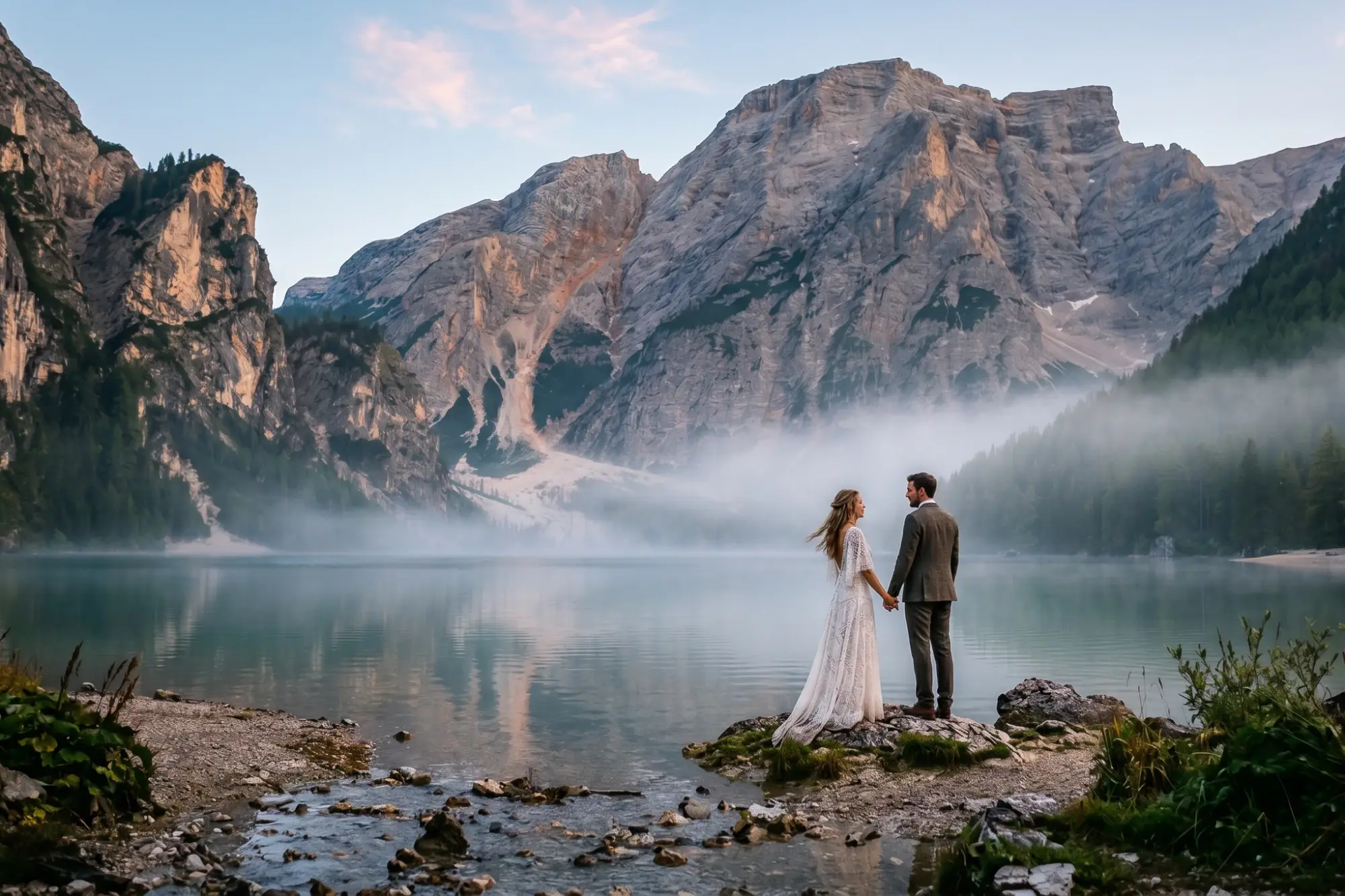
If you are wondering about the best time for wedding photos in the Dolomites, the short answer is this: the last two hours before sunset are usually the most beautiful, the most forgiving, and the most flattering. But the real answer depends on the season, your ceremony time, the mountain location you choose, and how you want the day to feel.
The Dolomites are dramatic in a way that changes by the hour. A lake can look silver and still at one moment, then bright and reflective an hour later. A mountain ridge can feel soft and cinematic in evening light, or harsh and contrast-heavy in the middle of the day. If you want wedding photos that feel natural, emotional, and calm rather than rushed or overly posed, timing matters more here than in many other places.
The best time for wedding photos in the Dolomites is usually golden hour
For most couples, golden hour is the sweetest spot. This is the period shortly before sunset, when the sun sits lower in the sky and the light becomes warmer, softer, and more dimensional. Skin tones look gentler, the landscape gains depth, and you are less likely to squint or feel exposed in bright overhead sun.
This is also the easiest light to relax into. Couples who feel nervous in front of the camera often do better in softer evening light because it creates a calmer atmosphere. There is less pressure to perform when the environment already feels beautiful and natural.
In the Dolomites, golden hour can be especially striking because the peaks catch light differently than the valleys. Some locations glow early, while others fall into shade before sunset. That is why the exact timing is never just “one hour before sunset” on paper. It depends on the direction of the mountains, the elevation, and how open the landscape is.
Why midday is harder than it looks
Midday is not impossible, but it is usually the least flattering time for portraits in the mountains. Bright overhead light creates stronger shadows under the eyes, more contrast on the skin, and less softness in the overall scene. If the location is very open, the sun can feel intense both visually and physically, especially in summer.
That does not mean your whole wedding day has to revolve around sunset portraits. It simply means that if you care most about your couple photos, it helps to protect some time later in the day. Documentary coverage works beautifully in any light because real moments are real moments. Portraits are the part of the day where timing makes the biggest visual difference.
How season changes the best time for wedding photos in the Dolomites
Season matters almost as much as light. The Dolomites do not look or behave the same way in June, September, or late October.
Summer
In summer, the days are long and sunset can be quite late. This gives you more flexibility, especially if you want a full celebration and still hope for mountain portraits in soft light. The trade-off is that popular places are busier, the sun can be strong during the middle of the day, and afternoon storms are more common.
If you are getting married in July or August, it often helps to plan a later dinner or leave space for a short sunset walk between courses. That way you do not have to choose between being present with your guests and having beautiful portraits.
Early fall
For many couples, early fall is the ideal season for Dolomites wedding photos. September and early October often bring softer temperatures, slightly quieter locations, and a more manageable sunset time. The light can feel cleaner and more even, which works beautifully for a cinematic, natural style.
This season also tends to feel less hectic. You are not rushing through the heat of the day, and evening portraits fit more naturally into the timeline.
Late fall
Late fall can be incredibly atmospheric, but it comes with less predictability. The days are shorter, temperatures drop quickly, and some mountain areas become harder to access. The upside is mood. Mist, lower sun, muted tones, and empty landscapes can create something very intimate and striking.
This is often a strong choice for couples who care more about feeling than bright, postcard-style scenery.
Winter
Winter weddings in the Dolomites can be stunning, especially if you love snow and quiet mountain light. The best timing often arrives earlier in the afternoon because sunset comes sooner and the sun stays lower all day. In some ways, that is a gift. You do not have to wait until late evening for flattering light.
The challenge is practical rather than aesthetic. Cold temperatures, wind, changing road conditions, and limited daylight mean you need a tighter plan and realistic expectations about how long you will want to be outside.
Ceremony timing shapes everything
One of the simplest ways to create better wedding photos is to schedule your ceremony with the portrait light in mind. If your ceremony begins too late, you may feel rushed afterward. If it begins too early, you may end up trying to fill a long stretch of bright afternoon before the light gets softer.
For most full wedding days in the Dolomites, a mid to late afternoon ceremony works well. It creates enough breathing room before dinner, allows for natural documentary coverage throughout the day, and keeps couple portraits close to the most beautiful light.
If you are planning an elopement or a very small wedding, you have more freedom. Sunrise can be extraordinary in the mountains, especially if privacy matters to you. The light is clean, the trails are quieter, and the whole experience can feel deeply peaceful. The trade-off is obvious - very early starts are not for everyone, and not every couple wants to begin their wedding day in the dark with an alarm clock.
The weather matters more than couples expect
In the Dolomites, cloud cover is not bad news. In fact, some of the most elegant wedding photos happen on overcast days. Soft clouds act like natural diffusion, creating even light that is flattering and calm. You may lose a dramatic sunset, but you gain softness and consistency.
What matters most is flexibility. Mountain weather can shift quickly, and the best timelines leave a little room to adapt. A photographer who knows the region will not only look at sunset time, but also at how a specific location handles cloud, shade, wind, and visibility.
This is where experience makes a difference. The best photo timing is not just about chasing perfect weather. It is about knowing what to do when the weather changes.
What if your schedule does not allow sunset portraits?
That happens more often than people think, especially at destination weddings where logistics, transportation, and dinner timing all need to align. If sunset portraits are not possible, the next best option is usually open shade or a location where the mountains block direct sun earlier in the day.
A good photographer can still create beautiful images in less-than-ideal light by choosing the right background, angle, and pacing. The difference is that the session may need a little more intention. Soft light gives you more freedom. Brighter light asks for more careful decisions.
If your priority is a relaxed experience with no awkward posing, it can help to keep portraits short and split them into two parts - a few minutes after the ceremony, then a second, quieter session later if the light improves.
The most beautiful photos are not always taken at the most obvious time
There is a reason couples ask about sunset so often. It usually is the most flattering option. But the best time for wedding photos in the Dolomites is not always the most famous time. Sometimes it is a cloudy afternoon with mist hanging low around the peaks. Sometimes it is blue hour, just after sunset, when everything feels still and cinematic. Sometimes it is a quiet morning when the landscape is empty and you can actually hear each other breathe.
The right choice depends on what you want your wedding to feel like when you look back at it. Bright and expansive. Soft and romantic. Quiet and moody. Private and unhurried.
That is the real goal - not forcing your day into a perfect lighting formula, but shaping the timeline around the moments that will let you be fully present, comfortable, and yourselves. In a place as powerful as the Dolomites, the light matters. But the feeling matters more, and the best photos usually happen when those two things meet at the same time.
Looking for a wedding photographer in Italy and Stockholm City Hall?
You can explore more of our work and wedding guides below.
• Dolomites Wedding Photographer
• Lake Garda Wedding Photographer
• Lake Como Wedding Photographer
• Tuscany Wedding Photographer
• Stockholm City Hall Weddings
• Northern Italy Wedding Guides
• Contact WeddingStudio.se