
Tuscany Wedding Planning
Tuscany Wedding Timeline: How Many Hours of Photography Do You Really Need?
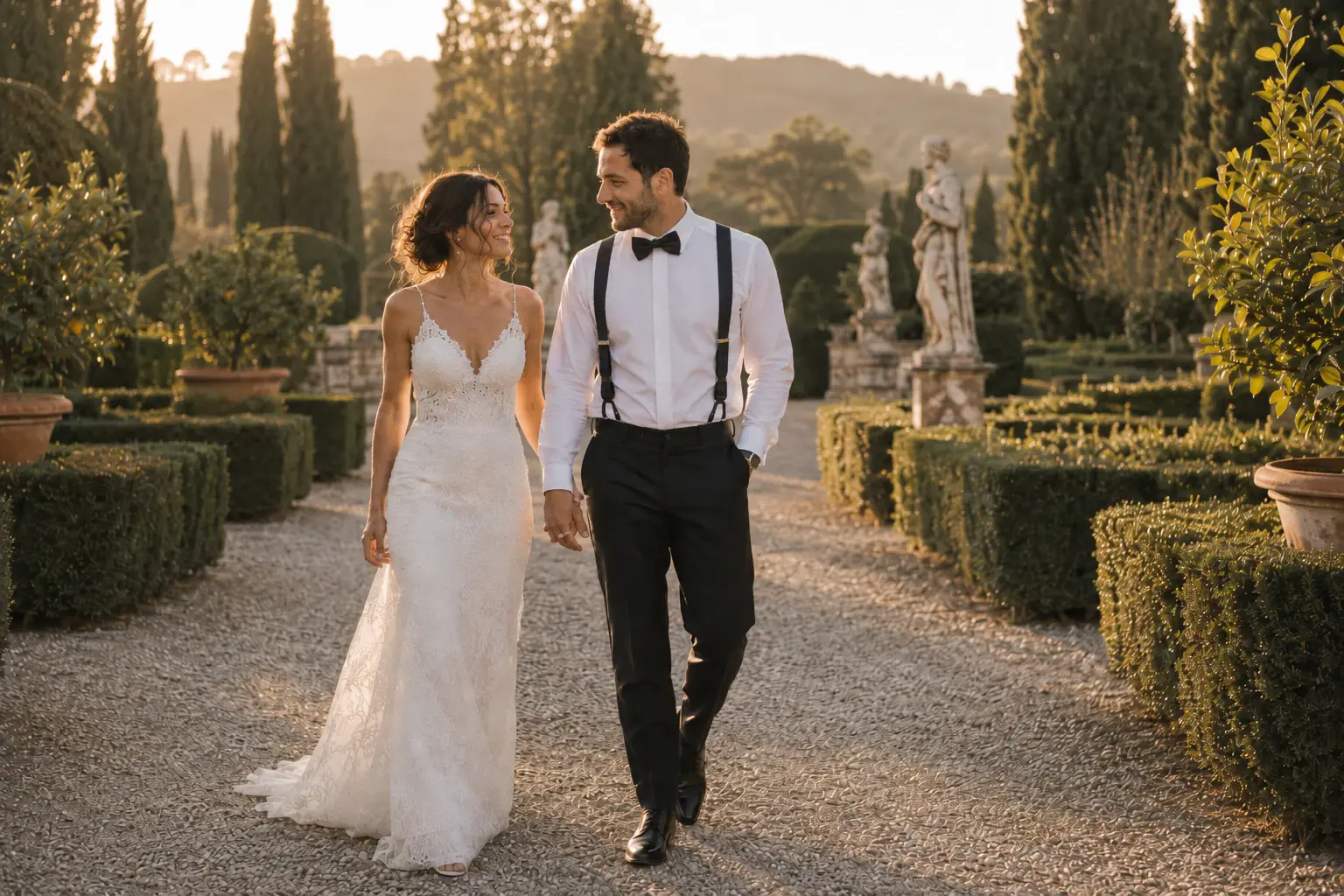
Planning a Tuscany wedding timeline is not about controlling every minute of the day. It is about creating enough space for the wedding to feel relaxed, emotional and beautifully lived in.
Tuscany has a very particular rhythm. The light changes slowly across the hills, the dinners tend to be long and atmospheric, the villas often have several beautiful spaces, and the best moments are not always the obvious ones. Sometimes it is the walk from the ceremony to aperitivo. Sometimes it is the way your guests gather around a long table under the trees. Sometimes it is the quiet five minutes after portraits, when you finally look at each other and realize the day is really happening.
That is why photography coverage matters so much.
If you are planning a destination wedding in Tuscany, you may be wondering whether 6 hours is enough, whether 8 hours feels safe, or whether you really need 10 or 12 hours of photography. The answer depends on your venue, guest count, getting ready location, ceremony time, dinner plans and how complete you want the final story to feel.
At WeddingStudio.se, we photograph destination weddings across Tuscany, Lake Como, Lake Garda, the Dolomites and Northern Italy with a documentary and cinematic approach. Our goal is not to turn your wedding into a photoshoot. It is to help you create a timeline that gives enough room for real moments, natural light and calm coverage.
If you are still comparing the investment side of photography, you may also want to read our guide to how much a wedding photographer costs in Tuscany.
Why Tuscany weddings need a different kind of timeline
A Tuscany wedding often happens across several layers of space and time.
You may be getting ready in a villa suite, having a ceremony in the garden, moving to a terrace for aperitivo, taking portraits in olive groves or vineyards, then sitting down for dinner under string lights or inside a courtyard. Even if everything happens at one venue, the day still has movement.
This is one of the reasons short photography coverage can feel limiting in Tuscany. The beauty of the place is not just one view. It is the way the day unfolds between the villa, the landscape, the light, the dinner table and the people you love.
A rushed timeline can make even the most beautiful venue feel stressful. A thoughtful timeline allows you to enjoy the place rather than constantly move through it.
The best Tuscany wedding timelines usually protect three things: emotional moments, soft light and guest experience.
You want time for the quiet anticipation before the ceremony. You want enough space after the ceremony for hugs and real reactions. You want portraits to feel natural, not like a long interruption. And you want to actually be present during aperitivo and dinner, because those are often some of the most atmospheric parts of a destination wedding in Italy.
For broader planning advice, this guide on an Italy wedding timeline that actually works can help you understand the bigger structure.
Is 6 hours enough for a Tuscany wedding?
Six hours can work for a smaller or simpler Tuscany wedding, but it is usually best for very specific situations.
For example, 6 hours may be enough if you are having an intimate ceremony and dinner at the same venue, you do not need much getting ready coverage, you have a short family photo list, and you are happy for the photographer to leave before the party begins.
A 6-hour timeline might cover the ceremony, congratulations, a short portrait session, aperitivo, dinner details and the beginning of dinner. It may feel enough for a small wedding where the story does not need to include the full morning or evening.
But for a full destination wedding in Tuscany, 6 hours often means making compromises. You may have to choose between getting ready and evening coverage. Or between relaxed portraits and documentary guest moments. Or between photographing the dinner setup beautifully and staying long enough for speeches or dancing.
It is not that 6 hours is wrong. It is that it needs to be intentional.
If your wedding is more than a simple ceremony and dinner, 6 hours may feel tight.
When 8 hours makes sense
Eight hours is often the first coverage option that starts to feel balanced for a Tuscany wedding.
With 8 hours, you can usually include final getting ready moments, the ceremony, congratulations, family photos, couple portraits, aperitivo, dinner details and part of dinner. This can work very well if everything is happening at one venue and the timeline is well organized.
For many couples, 8 hours is enough to tell the story of the day without feeling excessive. It gives the gallery a beginning, middle and evening atmosphere. It also allows your photographer to document both the emotional parts and the visual details of the venue.
However, 8 hours still requires choices.
If you want full getting ready coverage for both partners, multiple locations, a first look, golden hour portraits, full dinner, speeches, cake, first dance and party, 8 hours may not be enough. You may still need to prioritize.
A good 8-hour Tuscany wedding timeline works best when the day is not too spread out and when you are comfortable with coverage ending during dinner or shortly after the first evening moments.
Why 10 hours is often the sweet spot
For many Tuscany destination weddings, 10 hours is the most comfortable option.
It gives the day breathing room. You can start with getting ready, cover the ceremony, allow time for real congratulations, photograph family and couple portraits without rushing, document aperitivo properly, capture the dinner setup before guests sit down, stay for speeches and include at least the beginning of dancing or an evening moment.
This matters because Tuscany weddings often become more beautiful as the day goes on.
The golden hour, dinner light, candles, outdoor tables, speeches and first dance can all be part of the emotional story. If photography ends too early, the gallery may feel visually beautiful but incomplete.
Ten hours is especially helpful if you are planning a villa wedding with multiple spaces, a larger guest list, a long dinner or a ceremony later in the afternoon.
It also gives more flexibility if something runs late, which is very common at destination weddings. Hair and makeup may take longer. Guests may move slowly between locations. The ceremony may start a little late. Aperitivo may stretch naturally because everyone is enjoying themselves. With 10 hours, these small delays do not automatically create stress.
When 12 hours is worth it
Twelve hours of photography makes sense when you want the full story.
This is usually the right choice for larger weddings, luxury villa celebrations, multi-location days, weddings with both photo and video, or events where the evening celebration is very important.
If you want coverage from getting ready until the party is alive, 12 hours gives the photographer enough time to document the whole emotional arc: anticipation, ceremony, celebration, dinner, speeches, cake, first dance and dancing.
It can also be a strong choice if you are planning a welcome dinner or a day-after session and want one visual language across the entire wedding experience, although those are usually quoted separately as extra events.
For couples investing in a destination wedding in Tuscany, 12 hours can feel less like “more photos” and more like peace of mind. You are not constantly deciding what to skip. You are allowing the story to unfold.
Example Tuscany wedding timeline
For a relaxed villa wedding in Tuscany, I would usually build the day around light, guest movement and dinner atmosphere. The exact timing will depend on your ceremony hour and season, but a 10-hour timeline could look like this:
EXAMPLE TIMELINE
Relaxed 10-hour Tuscany wedding timeline
This example is designed for a destination wedding at a countryside villa in Tuscany, with getting ready, ceremony, portraits, aperitivo, dinner atmosphere and the beginning of the evening celebration.
Getting ready and details
Final hair and makeup, dress, accessories, stationery, flowers and quiet documentary moments before the day becomes busy.
Getting dressed
The final part of getting ready, with emotional moments, family reactions and a few clean portraits before the ceremony.
First look or final quiet moment
A private first look, a quiet pause with family, or a few minutes to breathe before guests gather for the ceremony.
Ceremony
A relaxed ceremony in the garden, courtyard or terrace, with documentary coverage of emotion, vows and guest reactions.
Congratulations and family photos
Time for hugs, candid reactions and a short organized family photo session before guests fully move into aperitivo.
Couple portraits
A natural portrait walk around the villa, olive trees, vineyards or countryside views, without making the day feel like a photoshoot.
Aperitivo
Documentary coverage of guests, drinks, music, food, conversations and the relaxed rhythm of an Italian countryside celebration.
Dinner setting and golden-hour portraits
Photos of the dinner space before guests sit down, plus a short golden-hour portrait moment if the light is especially beautiful.
Dinner and speeches
Atmospheric coverage of long tables, candlelight, speeches, reactions and the emotional rhythm of dinner.
Cake, first dance or evening atmosphere
The beginning of the evening celebration, with dancing, movement, cake or a final cinematic moment under the lights.
Photography coverage ends
A natural end point after the main evening moments, giving your gallery a complete story from anticipation to celebration.
Where portraits fit into a Tuscany wedding timeline
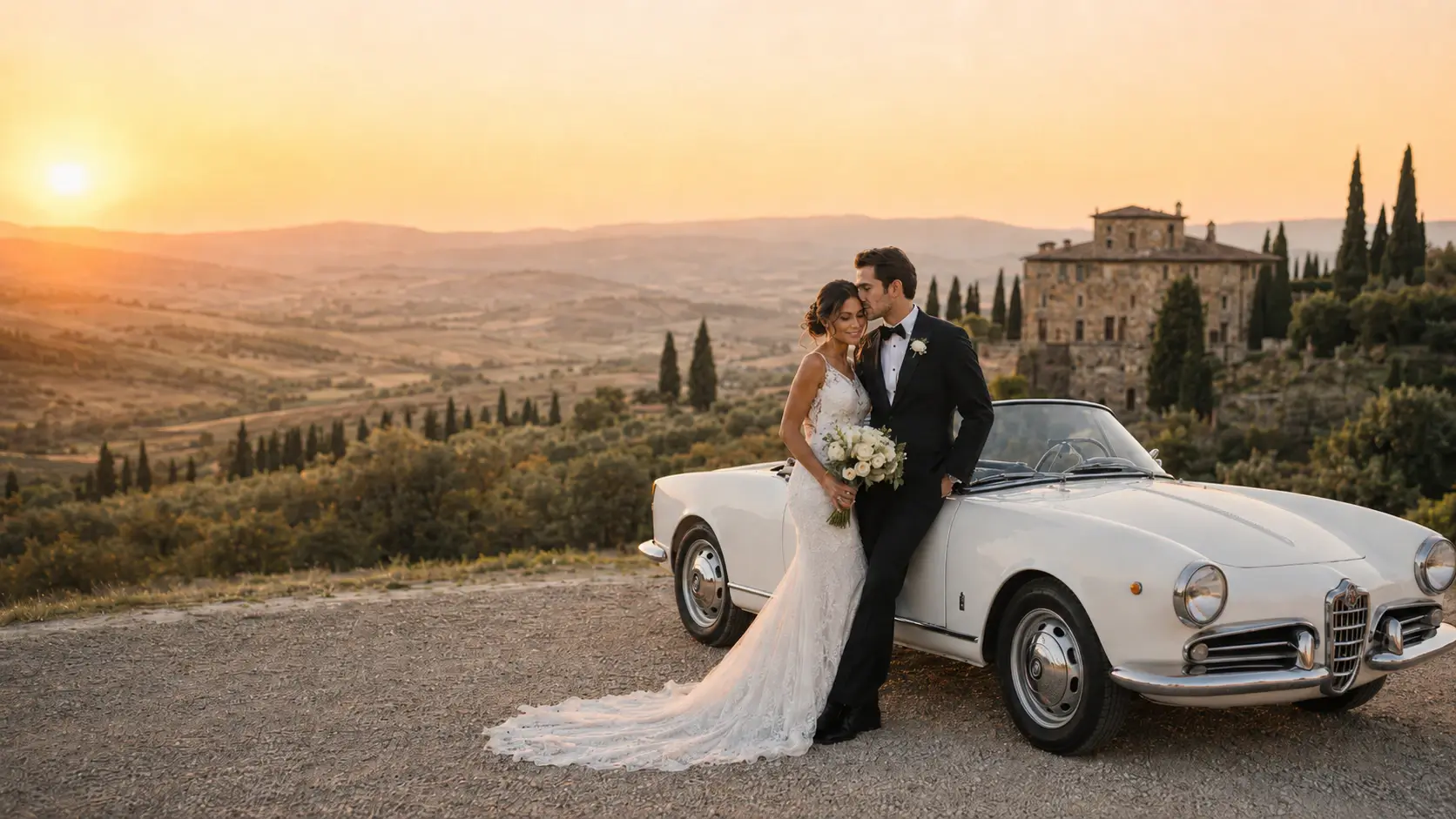
Portraits in Tuscany should rarely feel rushed. But they also should not take you away from your guests for too long.
For most couples, 25 to 35 minutes is enough for relaxed portraits if the location is close and the light is good. The best approach is usually to do a short portrait session after the ceremony, then a second very short session around golden hour if the light becomes beautiful.
This gives you variety without disappearing from the wedding.
The first portrait session can be more classic and location-focused: villa entrance, garden, cypress trees, vineyard rows, olive groves or countryside views. The second can be softer and more atmospheric: movement, sunset light, quiet emotion, walking together, a final moment before dinner.
If you are unsure whether a private first look would help your timeline, read this guide on whether you should do a wedding first look.
What about family photos?
Family photos are important, but they need structure.
For a Tuscany destination wedding, I recommend keeping the formal family list short and intentional. Around 8 to 12 groupings is usually comfortable. More than that can quickly take over the post-ceremony flow, especially if guests are spread across the venue or already moving toward aperitivo.
The best time for family photos is usually right after the ceremony, before everyone disperses. This is when guests are already gathered, dressed and emotionally present.
If you want the gallery to feel documentary and alive, do not let family photos consume the whole transition into aperitivo. Plan them, keep them organized and then move back into the natural rhythm of the day.
Why aperitivo matters so much in Tuscany
Aperitivo is one of the most important parts of the day to photograph.
It is where the wedding begins to feel relaxed. Guests have drinks in hand, the light softens, music starts, people laugh, and the venue comes alive. For many destination weddings, aperitivo is when guests really feel the place.
In Tuscany, this might happen on a terrace overlooking the hills, beside a pool, under olive trees, in a courtyard or in a garden near the villa. It is visually beautiful, but more importantly, it is emotionally rich.
If photography coverage is too short, aperitivo often gets reduced to a few quick images. That is a shame, because this part of the day usually tells so much about the atmosphere, guest experience and feeling of the wedding.
If you love candid photos, this is one of the moments worth protecting.
Dinner, speeches and evening coverage
Tuscany dinners are often long, warm and atmospheric. Long tables, candlelight, wine, speeches, string lights and countryside air all create a very particular mood.
This part of the day can be incredibly beautiful in photographs, but only if your timeline allows it.
Your photographer needs time to capture the dinner setup before guests sit down. Once everyone is seated, details naturally change. Glasses move, bags appear, jackets are placed on chairs, candles burn down and plates arrive.
The clean setup matters, but so do the real moments afterward.
Speeches, reactions, laughter, emotional pauses and the first part of dancing can add depth to the gallery. This is one of the reasons I often recommend 10 hours instead of 8 for Tuscany weddings. The evening is not just an add-on. It is often where the day becomes most alive.
Should you add a second photographer?
A second photographer can be very helpful for Tuscany weddings, especially if the wedding is larger or spread across several spaces.
If both partners are getting ready in different locations, a second photographer allows both stories to be documented. During the ceremony, one photographer can focus on the couple while the other captures guest reactions, wider views and movement. During aperitivo, one can follow candid guest moments while the other photographs details or portraits.
For smaller weddings, one photographer may be enough. But for larger destination weddings, two photographers can make the coverage feel more complete without adding pressure to the timeline.
If you are booking both photography and film, having a team that works with the same visual language can also make the day feel calmer. You can explore our approach to destination wedding photography and film.
How to choose the right coverage for your Tuscany wedding
The easiest way to choose photography coverage is not to start with the number of hours. Start with the story you want.
Do you want getting ready memories? Do you want both partners documented before the ceremony? Do you want a first look? Do you want a slow aperitivo? Do you care about golden-hour portraits? Do you want dinner atmosphere, speeches, cake, first dance and dancing?
Once you know which moments matter most, the number of hours becomes clearer.
For a very intimate wedding, 6 hours may be enough. For a balanced villa wedding, 8 hours may work. For a full destination wedding story, 10 hours is often ideal. For a larger celebration or a day where you want everything documented from beginning to party, 12 hours is usually the safest choice.
If you are still in the early planning stage, you may also find this guide to Northern Italy wedding venues useful, especially if you are still comparing Tuscany with Lake Como, Lake Garda or the Dolomites.
Final thoughts
A Tuscany wedding timeline should feel generous, not rigid.
The most beautiful photos often come from a day that has enough space for real emotion to happen. A quiet morning. A slow walk through the villa. A ceremony that does not feel rushed. A few relaxed portraits in soft light. Guests enjoying aperitivo. Dinner under the sky. Speeches that make people laugh or cry. A first dance that feels like the natural next chapter of the evening.
The goal is not to photograph every corner of the venue. The goal is to preserve how the day felt.
If you are planning a wedding in Tuscany and want your photography to feel natural, cinematic and deeply connected to the atmosphere of the place, we would love to hear what you are imagining.
You can explore our destination wedding photography and film collections, read more Tuscany wedding planning guides, or tell us about your wedding here.
Tuscany wedding timeline
Frequently asked questions
How many hours of photography do we need for a Tuscany wedding?
For most full destination weddings in Tuscany, 8 to 10 hours is a realistic starting point. Eight hours can work well for a wedding at one venue with a simple structure, while 10 hours usually gives more space for getting ready, ceremony, portraits, aperitivo, dinner and speeches.
If you want coverage from the beginning of the day until dancing, cake or party moments, 12 hours may be a better fit.
Is 6 hours enough for a Tuscany wedding?
Six hours can be enough for a very intimate wedding, elopement or simple ceremony and dinner at one location. It usually works best when you do not need full getting ready coverage or late evening photography.
For a full villa wedding with guests, aperitivo, dinner, speeches and dancing, 6 hours will often feel tight and may require you to choose which parts of the story to leave out.
What is the best ceremony time for a Tuscany wedding?
Late afternoon is often ideal, especially in warmer months. It helps avoid the harshest midday light and gives you a smoother transition into congratulations, portraits, aperitivo and dinner.
The exact time depends on the season, venue layout and sunset, but planning the ceremony with the light in mind can make the whole day feel softer and more comfortable.
When should we take couple portraits in Tuscany?
A short portrait session after the ceremony usually works well, especially while guests are moving into aperitivo. If the light is beautiful later, you can also plan a second 10-minute golden-hour session before or during dinner.
This gives you variety without taking you away from your guests for too long.
Do we need a first look for our Tuscany wedding?
A first look is not necessary, but it can help if your ceremony is late, your family photo list is long or you want more relaxed portraits before guests arrive.
If you prefer to see each other for the first time during the ceremony, that can be just as beautiful. The right choice depends on the emotional rhythm you want for the day.
Should we have two photographers for a Tuscany wedding?
A second photographer can be very helpful for larger weddings, multi-location venues or days where both partners are getting ready separately.
It also allows more angles during the ceremony, more guest reactions and a more complete documentary story without making the timeline feel heavier.
Should our photographer stay for dinner and dancing?
If dinner atmosphere, speeches, cake, first dance or party moments matter to you, it is worth having coverage into the evening.
Tuscany weddings often become especially atmospheric after sunset, with candlelight, long tables and emotional speeches, so ending coverage too early can make the final gallery feel incomplete.
Tuscany wedding photography
Planning your Tuscany wedding?
If you want your photos to feel natural, cinematic and deeply connected to the atmosphere of Tuscany, we’d love to hear what you’re imagining.
We photograph destination weddings, elopements and intimate celebrations across Tuscany and Northern Italy, with a calm documentary approach and a strong sense of place.