
Civil Weddings in Italy
Civil Wedding in Italy for Foreign Couples
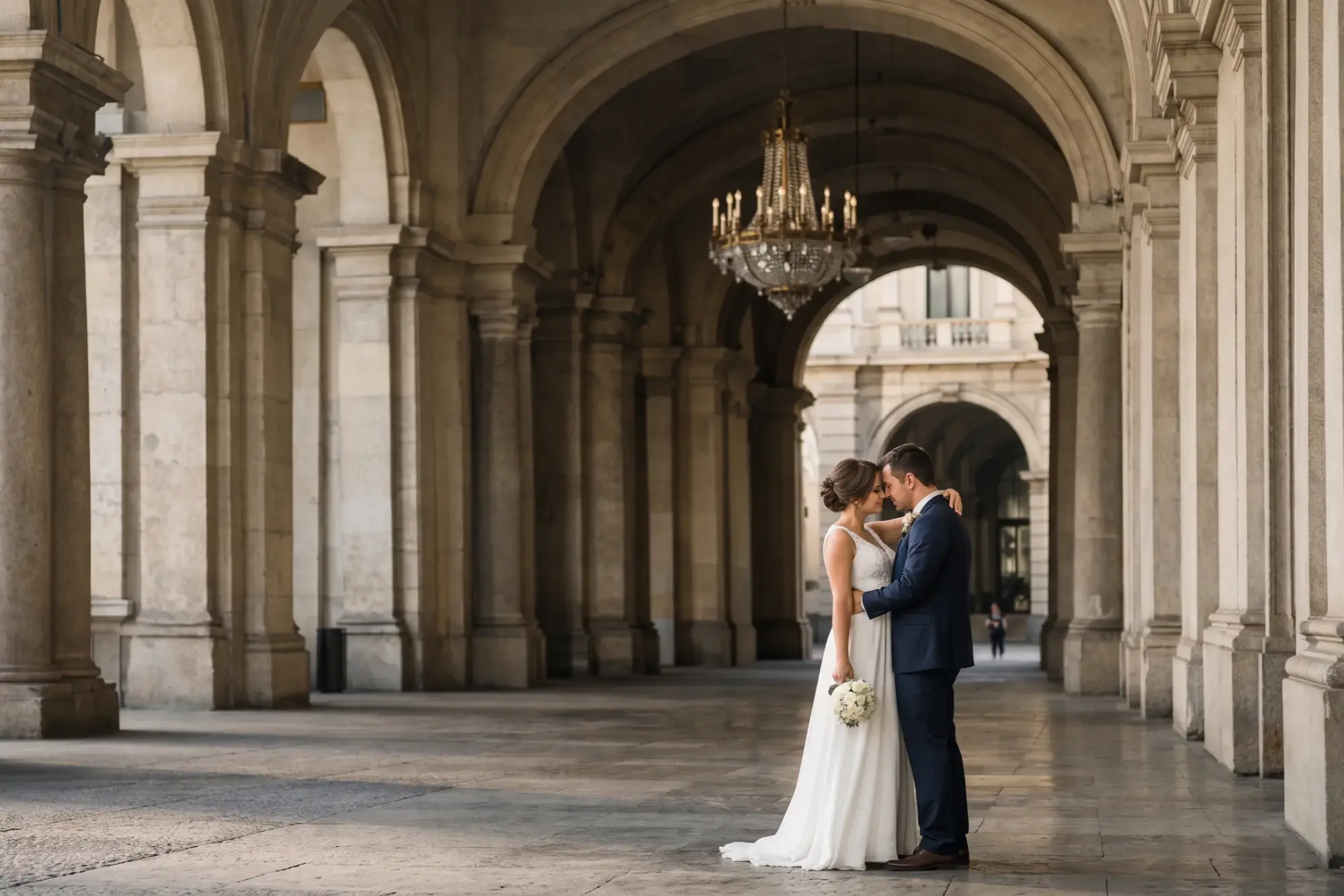
Yes, foreigners can have a legally recognised civil wedding in Italy, but the process depends on nationality, residence, documents, translations, the municipality and whether your chosen venue is approved for legal ceremonies.
For international couples, the legal side can feel less romantic than choosing the villa, the lake view or the dinner setting. But when the paperwork is understood early, a civil wedding in Italy can still feel calm, beautiful and personal.
This guide explains how civil weddings in Italy work for foreign couples, what documents are commonly requested, how timing can affect the planning, when a symbolic ceremony may be easier, and how to create photography and film coverage that preserves the real feeling of the day.
Quick answer: can foreigners have a legal wedding in Italy?
Yes. Foreign couples can have a legally recognised civil wedding in Italy, but the process depends on nationality, residence, documents and the municipality where the wedding will take place.
In general, couples may need valid passports, birth certificates, proof that they are free to marry, translated and legalised documents, and in many cases a Nulla Osta, Certificate of No Impediment or equivalent declaration.
Some couples choose to complete the legal paperwork in Italy. Others legally marry at home and have a symbolic ceremony in Italy for more flexibility, a more personal ceremony script or access to a venue that cannot host a legal civil marriage.
The right choice depends on how important it is for the Italian ceremony itself to be legally binding, how much paperwork you want to manage and how much freedom you want with the venue, ceremony style and timeline.
If you are planning a civil or symbolic wedding in Italy and want the photography to feel calm, natural and personal around the structure of the day, we would love to hear what you are imagining.
Civil wedding coverage
A legal ceremony can be brief. The story is not.
The documents determine whether the marriage is legally valid. The photographs hold everything around it: the arrival, witnesses, nerves, relief, portraits and the time you spend together afterward.
Explore civil wedding guides in Italy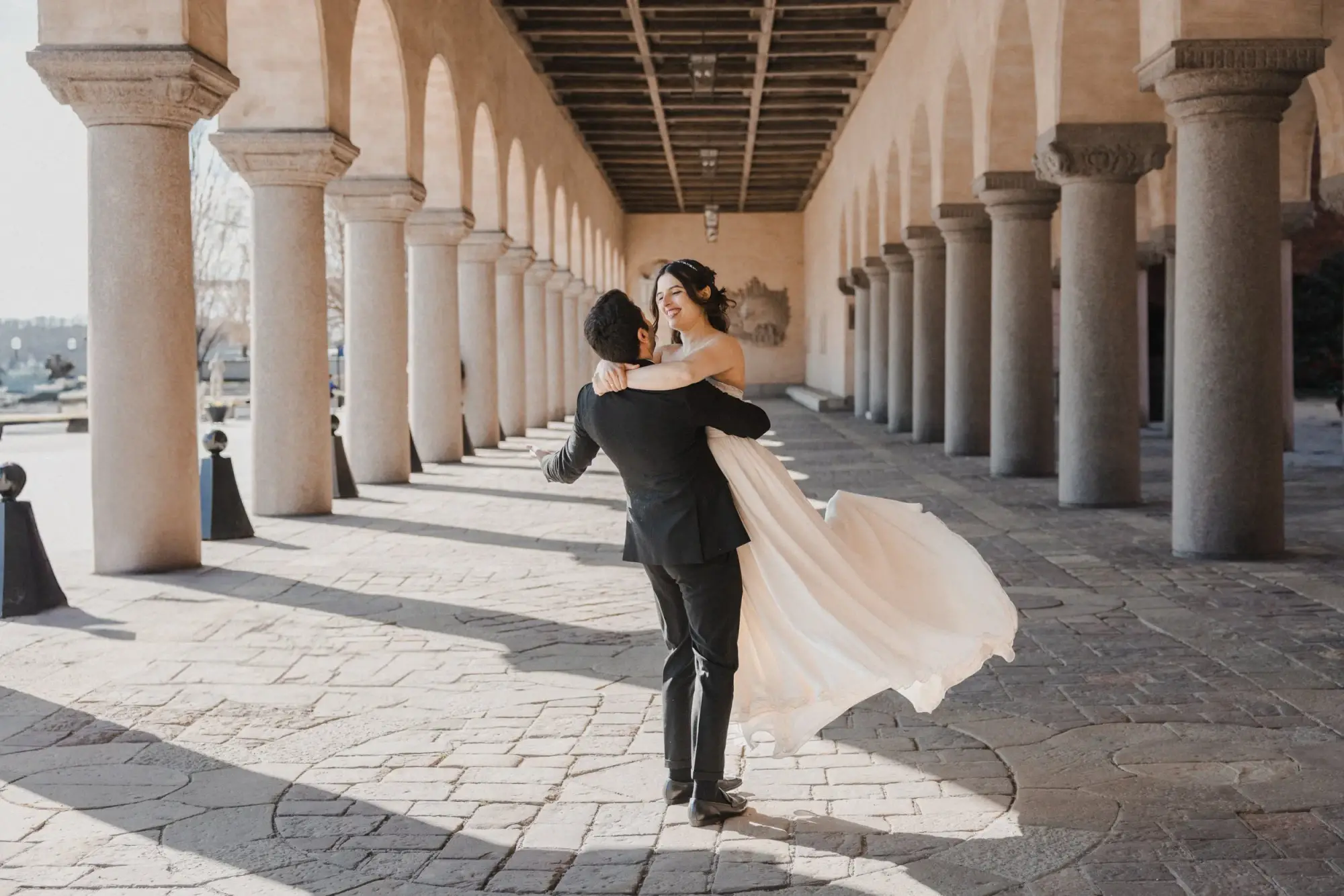
Civil wedding experience coverage
Documentary civil weddings at Stockholm City Hall
This page brings together different civil weddings with relevant photographic experience: short ceremonies, family greetings, portraits and the moments around them, documented with calm guidance and minimal interruption.
See some civil weddings photographed by WeddingStudio.seHow a civil wedding in Italy works
In Italy, a civil wedding is a legally binding ceremony performed by a mayor, deputy mayor, or civil registrar, usually in a town hall or another approved municipal venue. In some places, that venue may be an ornate historic room, a villa authorized by the local municipality, or a space with a view that feels far from administrative.
That distinction matters. Not every beautiful venue can host a legal civil marriage. Some can host only symbolic ceremonies, while others have official approval for civil weddings on site. If legal marriage in Italy is important to you, confirm the venue's status early rather than assuming the photographs you have seen reflect a legally valid ceremony.
The ceremony itself is usually short and formal compared with what many international couples expect. There may be room for personal vows or readings, but that depends on the municipality and the officiant. Some towns are more flexible, others are quite strict. If you want a deeply personalized ceremony, it is worth asking whether you are comfortable with a legal civil ceremony followed by a more expressive symbolic moment later in the day.
The paperwork is real, and it depends on your nationality
This is the part couples often underestimate. Italy allows foreign nationals to marry, but the documents required depend on citizenship, residency, marital status, and sometimes even the specific town where you plan to marry.
In general, foreign couples are commonly asked for valid passports, birth certificates, proof that there is no legal impediment to the marriage, and divorce or death certificates if either person was previously married. Some documents need to be translated into Italian and legalized or apostilled. Some must be issued recently, not years ago.
For many non-Italian citizens, one key requirement is a Nulla Osta, which is essentially a declaration that there is no legal obstacle to the marriage according to your home country's laws. In some cases, this is issued by your embassy or consulate in Italy. For certain nationalities, the process may involve a different certificate instead.
This is where broad internet advice becomes risky. What applies to a US couple may not apply to a British couple. What works for an EU citizen marrying a non-EU citizen may involve different steps altogether. Even within the same nationality, municipalities may interpret procedural details slightly differently. The safest approach is always to check directly with the town hall where you plan to marry and, if needed, your embassy or consulate.
Timing matters more than couples think
A civil wedding in Italy for foreign couples is not something to organize at the last minute unless you are working with a municipality known for efficient destination wedding handling and your documents are straightforward. Even then, rushing adds stress where you really do not need it.
Ideally, start the legal process several months in advance. This gives you time to request official documents, arrange translations, correct mistakes, and deal with delays. Public offices move at their own pace, and summer wedding season can make everything busier.
There is also the issue of document validity. Some certificates expire for practical purposes after a certain number of months, especially if the municipality requires recently issued originals. If you collect paperwork too early, you may need to do it again. If you collect it too late, you may run into processing delays. That is why a clear timeline matters as much as the documents themselves.
What to expect when you arrive in Italy
Many couples need to be in Italy at least a few days before the wedding to finalize declarations or attend an appointment at the town hall. In some cases, there may be a formal declaration of intent to marry. In others, your planner or local coordinator may help prepare everything in advance so the in-person part is minimal.
You will also usually need witnesses for the ceremony. If you are traveling alone or keeping the wedding very intimate, some municipalities can help provide witnesses, but this should never be assumed. Ask early.
Language is another practical point. If neither of you speaks Italian, an interpreter may be required for the legal ceremony. Some towns insist on this; others may allow the officiant to conduct the ceremony in English if they are able. Again, this varies. It is a small detail until it suddenly becomes a legal necessity.
How the legal ceremony affects your photography timeline
A civil wedding in Italy is often shorter and more formal than many couples expect. That does not make it less meaningful, but it does change how the day should be planned.
Because the legal ceremony itself may be concise, the emotional story often happens around it: getting ready, travelling to the town hall or venue, seeing each other before the ceremony, the witnesses, the first reactions, family hugs, walking through the streets afterward, aperitivo and the celebration that follows.
For a small civil wedding, two to four hours of photography may be enough if you want the ceremony, a few portraits and some atmosphere afterward. For a fuller destination wedding day, especially if you include guests, aperitivo, dinner or a symbolic ceremony later, you may want longer coverage.
If you are planning both a legal civil ceremony and a larger celebration, it can help to think of them as one story rather than two disconnected events. The legal part gives the day structure. The celebration around it gives the story its emotion.
Choosing the right location for the legal part
Not every destination in Italy is equally easy for foreign couples. Some municipalities have long experience with international weddings and are organized, clear, and responsive. Others are more bureaucratic or have fewer options in English.
This does not mean you need to give up on a place you love. It means you should weigh beauty against simplicity. A lakeside town or mountain municipality in Northern Italy may offer a stunning setting and a calm pace, but the real question is how well the local office handles foreign paperwork and whether your chosen venue is approved for civil ceremonies.
For some couples, the best choice is to legally marry in a town hall with a reliable process, then celebrate at a separate venue that reflects their style more fully. For others, having everything in one place is worth the extra coordination. Neither choice is more romantic. It depends on whether ease or continuity matters more to you.
Best places for a civil wedding in Italy for foreign couples
Villa del Balbianello, Lake Como
One of the most iconic civil wedding locations in Italy for foreign couples. Villa del Balbianello is known for its dramatic lake views, boat arrivals, historic gardens, and cinematic atmosphere. It works especially well for couples who want a legal ceremony that still feels visually extraordinary.
Because the venue is internationally recognized for destination weddings, the surrounding wedding infrastructure is strong. Planners, boat companies, florists, and visual teams are already very familiar with the logistics here, which can make the experience smoother despite the complexity of Lake Como itself.
Best for:
✦ iconic Lake Como atmosphere
✦ elegant civil ceremonies
✦ boat arrivals and panoramic views
✦ editorial and cinematic weddings
Hotel Villa Cipressi, Lake Como
Villa Cipressi is often a beautiful choice for couples who want the atmosphere of Lake Como without the scale or intensity of some larger luxury villas. The botanical gardens, lakefront terraces, and hotel structure create a softer and more intimate rhythm for the day.
For foreign couples, it can also be easier logistically because guests can stay nearby and move through the celebration more comfortably. This tends to work especially well for smaller weddings and couples who care about emotional atmosphere as much as visual impact.
Best for:
✦ intimate destination weddings
✦ relaxed luxury
✦ guest convenience
✦ romantic lakefront ceremonies
Casa di Giulietta
For couples drawn to classic Italian romance, Juliet’s House in Verona remains one of the most recognizable civil wedding locations in Northern Italy. Civil ceremonies can take place inside the historic complex connected to the Romeo and Juliet story, creating a setting that feels deeply tied to Italian culture and symbolism.
Verona also tends to be more practical than many lake destinations, with strong train connections, easier guest logistics, and a historic center that works beautifully for walking portraits and intimate celebrations afterward.
Best for:
✦ romantic Italian atmosphere
✦ smaller civil ceremonies
✦ accessible destination weddings
✦ couples who love historic cities
Palazzo Barbieri
Palazzo Barbieri is the official city hall of Verona and one of the most established places for legal civil weddings in the region. Located beside the Arena di Verona, it combines historic architecture with a relatively straightforward administrative process for international couples.
It is a particularly good option for couples who want a legally recognized Italian wedding in a city that feels elegant and atmospheric without becoming overly logistically demanding.
Best for:
✦ legal civil weddings in Italy
✦ easier administration
✦ historic city atmosphere
✦ elegant but practical celebrations
Palazzo Reale di Milano
For couples looking for a more refined city wedding, Palazzo Reale offers one of the most visually impressive civic settings in Milan. Located beside the Duomo, it combines grand architecture with the convenience of an international city, which can simplify travel, accommodation, and paperwork for foreign couples.
Milan works especially well for couples who want to combine a legal civil ceremony with a larger celebration elsewhere in Northern Italy afterward, such as Lake Como, Lake Garda, or the Dolomites.
Best for:
✦ elegant city weddings
✦ international accessibility
✦ combining legal ceremony with destination celebration
✦ fashion-forward couples
Palazzo Marino
Palazzo Marino is the official city hall of Milan and one of the most important civic wedding locations in Northern Italy. While more administrative in feeling than the lakeside villas, it is highly relevant for foreign couples because Milan is well connected, experienced with international visitors, and often easier for handling legal documentation.
Many couples choose to complete the legal civil marriage here before continuing to another part of Italy for a more private or scenic celebration.
Best for:
✦ straightforward legal ceremonies
✦ foreign couples handling more complex paperwork
✦ easy airport and train access
✦ combining practicality with Italian atmosphere
If you are choosing between several civil ceremony locations, think beyond how the room looks in photographs. Ask how easy the municipality is to work with, whether an interpreter is required, how guests will arrive, where portraits can happen afterward and whether the legal ceremony fits naturally into the rest of the day.
Costs are not just about the ceremony fee
The official civil ceremony fee may be reasonable, but the full cost often includes more than couples first expect. There can be municipality charges, venue rental fees, interpreter costs, document translation, legalization, courier fees, and planner support if you want help managing the process.
Some towns also charge higher fees for non-residents, weekend ceremonies, or weddings held outside the standard town hall room. If you are choosing a premium location, the legal ceremony may be only one line in a much broader budget.
This is not necessarily bad news. It simply means the legal part should be costed honestly from the beginning. Couples often feel more relaxed when they know which expenses are fixed, which are optional, and which may change depending on timing or nationality.
Photography and film should be considered separately from the legal ceremony fee. A short town hall ceremony may need only a few hours of coverage, while a civil wedding followed by aperitivo, portraits, dinner and speeches may need a much fuller photography and film plan.
Making a legal ceremony feel personal
One quiet concern many couples have is that a civil ceremony can feel formal or emotionally thin. Sometimes that worry is justified. Italian civil ceremonies are often concise, and the legal wording may feel administrative rather than intimate.
But the feeling of the day does not come only from the script. It comes from the room, the people, the timing, the music, the way you enter, the way you look at each other, and what happens before and after those official words. A short legal ceremony can still carry enormous weight when the day around it has been designed with care.
This is especially true for couples who do not want performance. If you are camera-shy or uneasy with attention, a civil wedding can actually suit you beautifully. The structure is simple. The legal moment is clear. The rest of the day can unfold more naturally, without pressure to stage emotion.
That is often where experienced visual storytelling matters most. Teams like WeddingStudio focus on real moments, so the day does not need constant posing to feel cinematic. The atmosphere, the anticipation, the relief, the laughter afterward - those details often say more than a long ceremony script ever could.
When a symbolic ceremony may be the better fit
There are couples who start out wanting a legal wedding in Italy and later realize a symbolic ceremony gives them more freedom. That can happen if the paperwork becomes too complex, if timelines are too tight, or if they want a location that cannot host a legal civil marriage.
There is no loss of meaning in making that choice. Many couples complete the legal paperwork at home, then celebrate in Italy with a ceremony that feels more personal, more private, or more visually aligned with the place they fell in love with.
If your priority is simplicity, privacy, or complete creative control, it may be the better option. If your priority is being legally married in Italy on the day itself, then the civil route is worth the effort. The right decision is the one that lets you stay present rather than overwhelmed.
Italy can give you a wedding day that feels deeply human, elegant, and full of atmosphere. The legal process may ask for patience, but once that part is handled well, you are free to be where you should be - with each other, fully in the moment.
Civil wedding in Italy FAQ
Questions foreign couples often ask about civil weddings in Italy
Can foreigners have a legally recognised civil wedding in Italy?
Yes. Foreign couples can have a legally recognised civil wedding in Italy, but the process depends on nationality, residence, documents and the municipality where the ceremony will take place.
Because requirements can vary, it is important to confirm the exact process with the local town hall, your embassy or an experienced wedding planner.
What documents do foreign couples need to marry in Italy?
Common documents may include valid passports, birth certificates, proof that both partners are free to marry, translated and legalised documents, and a Nulla Osta, Certificate of No Impediment or equivalent declaration.
The exact list depends on your nationality, residence, previous marital status and the municipality where you plan to marry.
Is a civil wedding in Italy difficult to organise?
It can be straightforward with the right documents and an experienced municipality, but it is rarely something to leave until the last minute.
The main challenges are usually document timing, translations, apostille or legalisation, interpreter requirements and local town hall procedures.
Should we legally marry at home and have a symbolic ceremony in Italy?
This can be a very good option for couples who want more flexibility, a more personal ceremony script, or a venue that cannot host a legal civil wedding.
A symbolic ceremony in Italy can still feel deeply meaningful, especially if the day is designed around your people, your vows and the atmosphere of the location.
How much photography coverage do we need for a civil wedding in Italy?
For a simple town hall ceremony, two to four hours may be enough for ceremony coverage, portraits and some atmosphere afterward.
If your civil ceremony is part of a fuller destination wedding day with guests, aperitivo, dinner or a symbolic celebration later, longer coverage may help the gallery feel more complete.
Can a civil wedding in Italy still feel emotional and personal?
Yes. Even if the legal ceremony itself is short, the feeling of the day comes from the people, the location, the timing, the music, the way you arrive and what happens before and after the official words.
Documentary photography and film can help preserve those emotional parts without forcing the day to feel staged.
Civil weddings in Italy
Planning your civil or symbolic wedding in Italy?
If you’re planning a legal wedding in Italy as a foreign couple, or choosing a symbolic ceremony for more flexibility, we’d love to help you think through the day with calm and clarity.
We photograph and film civil and destination weddings with a relaxed, documentary and cinematic approach, preserving the people, atmosphere and emotional rhythm of the celebration without turning the day into a staged production.
We can help you understand what kind of coverage makes sense around your ceremony, location flow, portraits, aperitivo, dinner and the meaningful moments before and after the legal part of the day.