
Lake Garda Wedding Planning
Lake Garda Wedding Weekend: A Refined Three-Day Itinerary for International Couples
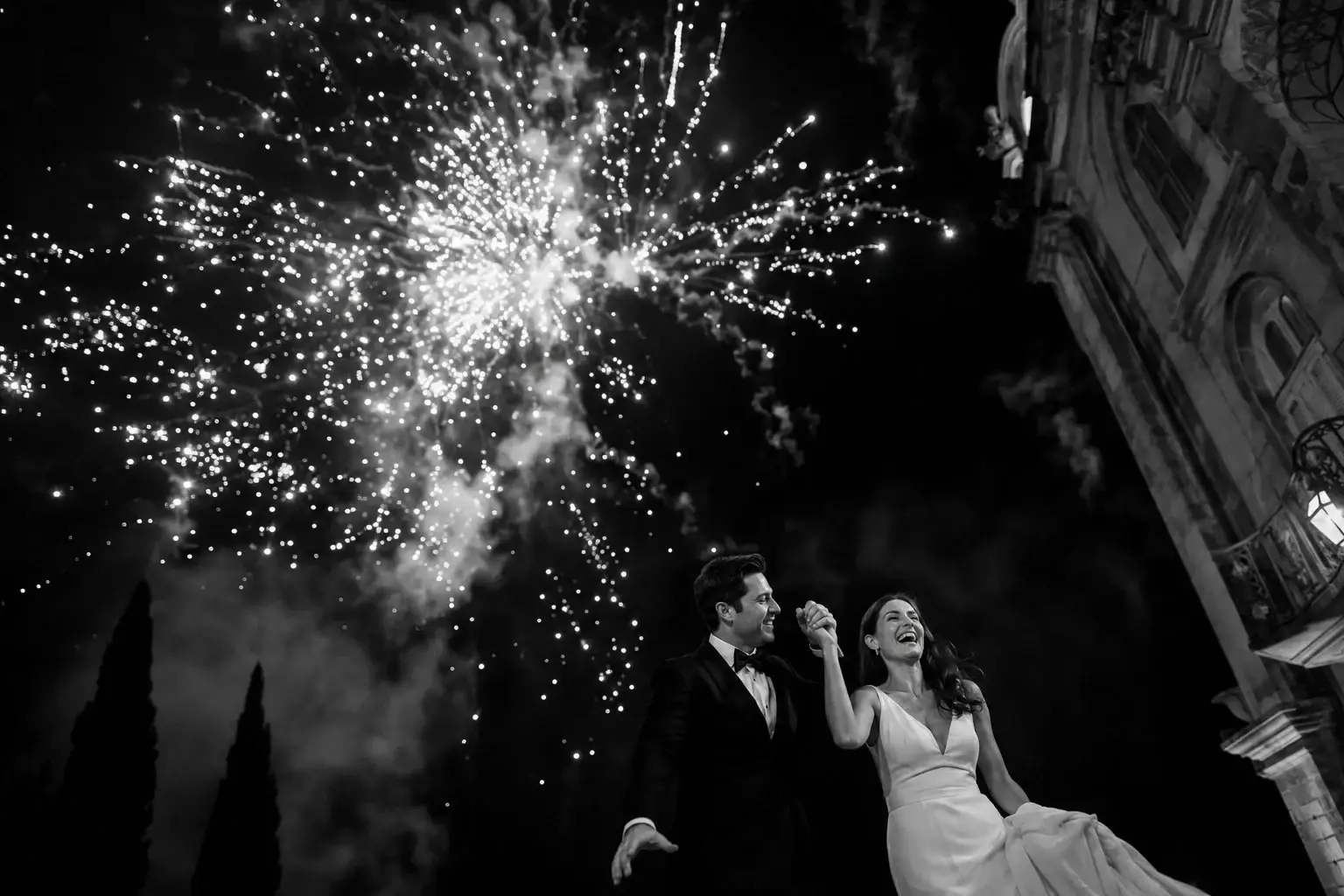
A destination wedding in Lake Garda is rarely only about one day.
Your guests may be travelling from different countries, taking time away from work and turning the celebration into part of a longer Italian journey. Some will arrive excited and ready to explore. Others may arrive tired, carrying luggage, children and all the small complications that come with travelling somewhere unfamiliar.
A thoughtfully planned Lake Garda wedding weekend gives everyone time to arrive properly.
Instead of asking every important reunion, emotion and experience to fit into a single tightly scheduled wedding day, you can create a slower celebration: a relaxed first evening, a wedding day with enough space to breathe and a final gathering where no one needs to disappear immediately after breakfast.
It also allows something to happen that cannot be created through styling alone.
Your guests begin to connect.
By the time the ceremony starts, people have already met, shared a drink, learned one another’s names and settled into the atmosphere of the celebration. The wedding can feel less like a formal event attended by separate groups and more like a shared experience.
This guide offers a possible three-day Lake Garda wedding itinerary, together with practical advice about guest accommodation, transport, boat experiences, photography and the overall rhythm of a multi-day destination wedding.
If you are still choosing where around the lake to celebrate, our guide to the best Lake Garda wedding venues is a useful place to begin.
Why Lake Garda works so well for a destination wedding weekend
Lake Garda gives a wedding weekend room to unfold across welcome drinks, the ceremony, dinner and a final gathering, without asking every meaningful moment to fit into one day.
Its variety is part of the appeal, but it also makes choosing one central area important. The right base should reflect the atmosphere you prefer and keep travel manageable for guests.
What makes a Lake Garda wedding weekend feel genuinely luxurious
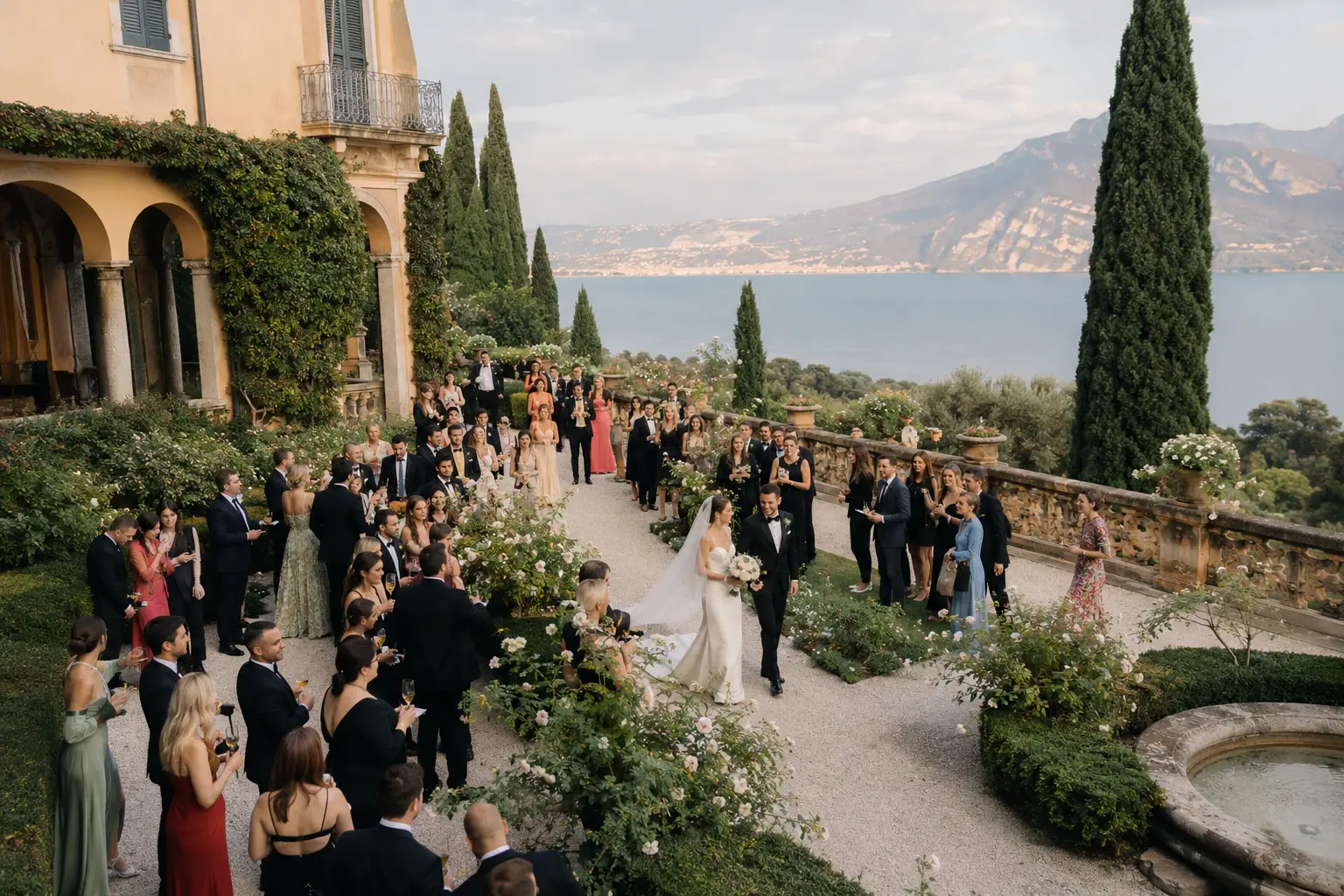
Luxury is often presented as a visual idea: architecture, flowers, fashion, table design and beautiful lake views.
Those details can certainly be meaningful. But during an actual destination wedding, luxury is often experienced in quieter ways.
It is knowing that transportation has already been arranged.
It is having time to finish getting ready without everyone looking at the clock.
It is being present for aperitivo instead of spending most of it travelling between photo locations.
It is allowing dinner to unfold slowly while the light changes across the lake.
It is creating a weekend where guests understand where they need to be without receiving a complicated itinerary for every hour of the trip.
It is giving your families enough time to talk, laugh and reconnect without continuously moving them from one activity to another.
The most refined destination weddings often feel intentional rather than crowded. Every part of the weekend has a reason to exist, but not every hour needs to be filled.
How many days should a Lake Garda wedding last?
For many international couples, two or three days creates a natural balance.
A two-day celebration might include a welcome dinner followed by the wedding day. This can work well when many guests need to leave the morning after the wedding or when the couple wants a more contained experience.
A three-day wedding weekend usually includes:
guest arrivals and a welcome gathering;
the wedding day;
a farewell brunch or relaxed final activity.
Some couples extend the experience further with a private family dinner, boat afternoon, rehearsal, pool day or day-after portrait session.
More events do not automatically create a better wedding. The goal is to choose the moments that add connection rather than simply filling the schedule.
The timetable below is not a fixed formula. It can be adapted according to your venue, season, guest count, ceremony type and the part of Lake Garda where you are staying.
If a full weekend feels larger than you want, our Lake Garda elopement guide offers a smaller, equally considered alternative.
EXAMPLE TIMELINE
A relaxed Lake Garda wedding weekend timeline
This example works well for a full Lake Garda wedding weekend with guest arrivals, a welcome dinner, a relaxed wedding day and a farewell brunch. The exact timing should always be adapted to your ceremony time, season, light, guest count, transport logistics and whether you are planning photo, film or multi-day coverage.
Guest arrivals and hotel check-in
Guests settle in, receive practical information and have time to rest before the first event of the weekend begins.
Welcome drinks and aperitivo
A relaxed opportunity for families and friends to meet, reconnect and ease into the celebration without the formal structure of the wedding day.
Informal dinner
A lakeside meal or garden dinner with simple food, conversation and atmosphere, allowing the first evening to feel warm and social without becoming overly structured.
Getting ready and venue atmosphere
Natural photos of the setting, final preparations, details, family moments and the quiet atmosphere before the day becomes official.
First look or final ceremony preparations
A private first look can help the day feel calmer. If not, this time can be used for ceremony details, guests arriving and final atmosphere.
Ceremony
A later afternoon ceremony often gives softer light and a more comfortable rhythm for a Lake Garda wedding, especially in warmer months.
Congratulations and candid moments
Leave space for hugs, laughter, family reactions and the emotional transition after the ceremony before moving into formal photos.
Family and group photos
Keep the list intentional and compact so this part feels smooth and does not take too much time away from aperitivo.
Aperitivo and guest coverage
Documentary photos of guests relaxing, drinks, conversation, atmosphere and the real feeling of the celebration around the venue.
Couple portraits
A relaxed portrait session using the venue, lake views and soft evening light without turning the day into a long photoshoot.
Dinner begins
Guests move into dinner while the atmosphere becomes more intimate, allowing space for conversation, food, candlelight and the emotional rhythm of the evening.
Speeches and evening atmosphere
A natural part of the evening where reactions, table atmosphere and the emotional tone of the celebration often become some of the most meaningful images.
First dance and celebration
The formal part of the day gives way to music, movement and the beginning of the evening celebration.
Farewell brunch
A gentle ending to the wedding weekend where guests can gather once more, revisit the memories of the day before and say goodbye without rush.
Day one: guest arrivals and the welcome evening
The first day should help guests feel grounded rather than immediately asking them to follow a formal programme.
Many international guests will have travelled through airports, train stations, rental-car offices and unfamiliar roads before arriving at Lake Garda. Scheduling the first event too early can create pressure, especially if everyone is expected to attend immediately after checking in.
A late-afternoon or early-evening welcome gathering usually gives people enough time to arrive, rest and change without losing the entire day.
Guest arrivals and hotel check-in
Whenever possible, keep most guests in the same hotel or within a relatively small area.
They do not necessarily need to stay at the wedding venue. However, accommodation scattered across several distant towns can make transport, communication and the morning after the wedding significantly more complicated.
A clear welcome note can include:
the weekend schedule;
transport and shuttle information;
venue addresses;
contact details for the planner or coordinator;
dress guidance;
information about boat transfers;
local restaurant or activity recommendations;
anything guests should bring for outdoor events.
The goal is to answer practical questions before they become urgent messages on the wedding morning.
Choosing the right welcome event
A welcome gathering does not need to resemble a second wedding reception.
It can be a relaxed aperitivo on a terrace, drinks in a garden, a private restaurant dinner or a simple lakeside evening with local food and wine.
A seated dinner feels more structured and can work well for a smaller group. A standing aperitivo encourages guests to move, meet and speak to people outside their immediate family or friendship group.
A boat welcome experience can be memorable, but it needs more careful coordination. Guests must arrive on time, boarding can take longer than expected and wind or weather may affect the atmosphere.
For many couples, the most natural format is drinks and aperitivo followed by an informal dinner.
Why welcome dinner photography can be so meaningful
The welcome evening often contains some of the most honest moments of a destination wedding.
People are seeing one another for the first time after months or years. Families are meeting. Friends are arriving from different countries. There are hugs, stories, introductions and the anticipation of what will happen the following day.
Because the evening is less formal, guests may also be less aware of the camera.
This makes the welcome event especially suited to documentary photography. The focus is not on recreating the wedding day or organising a long list of portraits. It is on preserving relationships, movement, atmosphere and small interactions.
A few relaxed couple portraits can still be included, particularly if the location has beautiful evening light. They should feel like a natural pause in the evening rather than a separate production.
Let the first evening end naturally
It can be tempting to turn the welcome dinner into a full party, especially when guests are excited to see one another.
But finishing at a reasonable hour often protects the experience of the wedding day.
The wedding party can sleep, suppliers can prepare and the couple can begin the next morning without already feeling exhausted.
The first evening should open the story, not consume all of its energy.
Day two: the Lake Garda wedding day
The wedding day should feel like the emotional centre of the weekend, not the most complicated part of it.
Because guests have already arrived and met one another, the day can begin with less social pressure. There is no need to squeeze every greeting and reunion into the minutes before the ceremony.
If you are trying to decide how long your coverage should be, our complete Lake Garda wedding timeline guide compares shorter celebrations with eight, ten and twelve-hour wedding days.
Begin photography during the final preparations
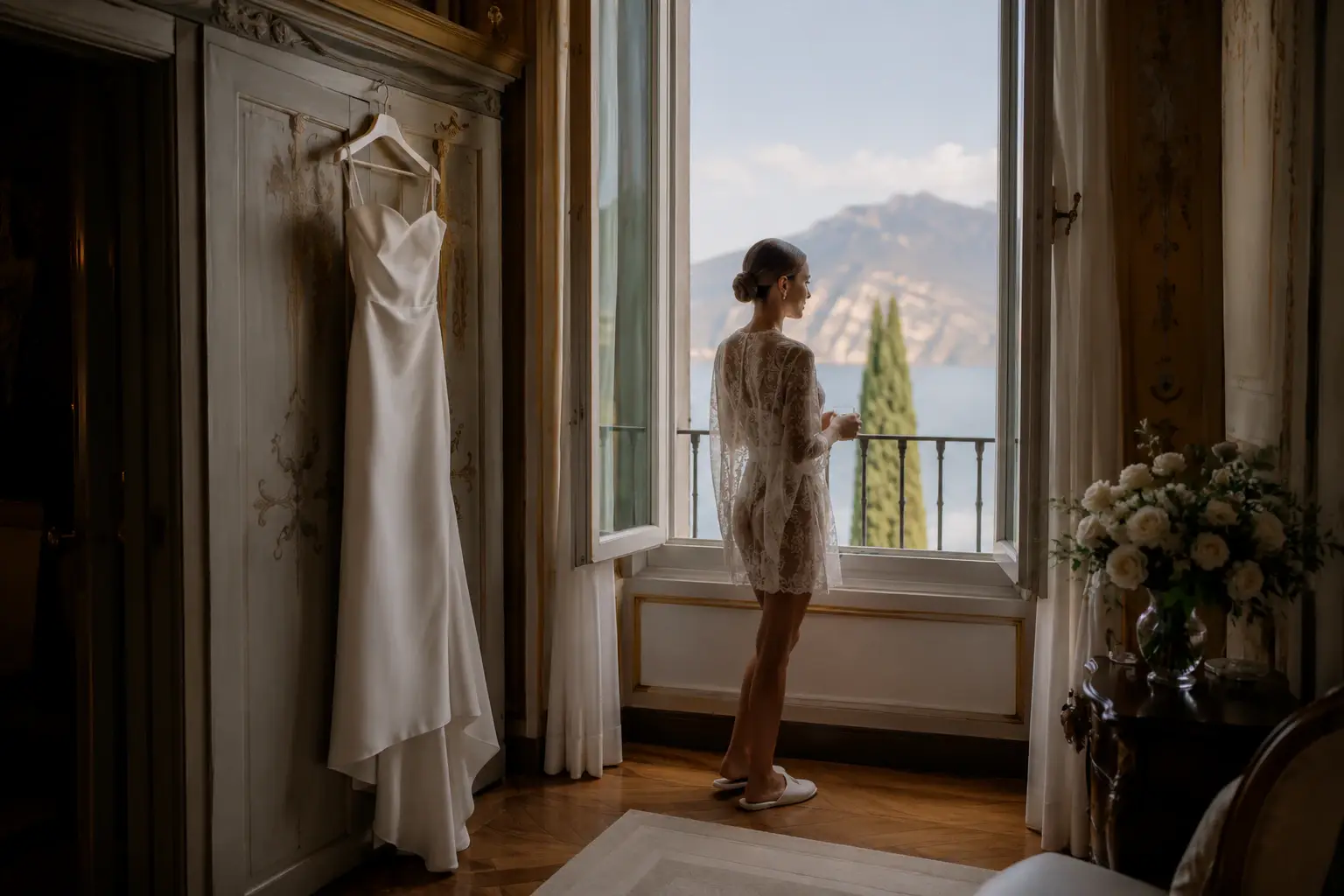
Getting-ready coverage does not necessarily need to begin the moment hair and makeup starts.
For many weddings, beginning closer to the final stages allows the photographer to document the atmosphere, personal details and relationships without creating hours of repetitive coverage.
This part of the day may include:
final hair and makeup;
wedding attire and meaningful details;
parents or friends helping;
letters and gifts;
a quiet portrait before leaving;
the nervous or joyful energy building before the ceremony.
When both partners are preparing in different locations, a second photographer can be particularly valuable. Both stories can be documented without asking the main photographer to travel between hotels or miss important moments.
Leave a real buffer before the ceremony
Hair and makeup can run late. Flowers may need adjusting. Someone may struggle with an outfit, lose a button or need help finding the ceremony location.
A strong wedding timeline assumes that real life will happen.
Without a buffer, a fifteen-minute delay can affect the ceremony, aperitivo, portraits, dinner and sunset. With one, the day can absorb small complications without feeling as though it is falling apart.
Should you have a first look?
A first look can work particularly well when:
the ceremony happens later in the afternoon;
the couple wants some quiet time together;
family photos need to happen before the ceremony;
the venue has a private location away from arriving guests;
the couple wants to experience more of aperitivo afterwards.
It is not essential, and it should not feel like a scene created purely for photography.
When approached naturally, it can simply be a quiet meeting between two people before the social part of the day begins.
Planning an outdoor Lake Garda ceremony
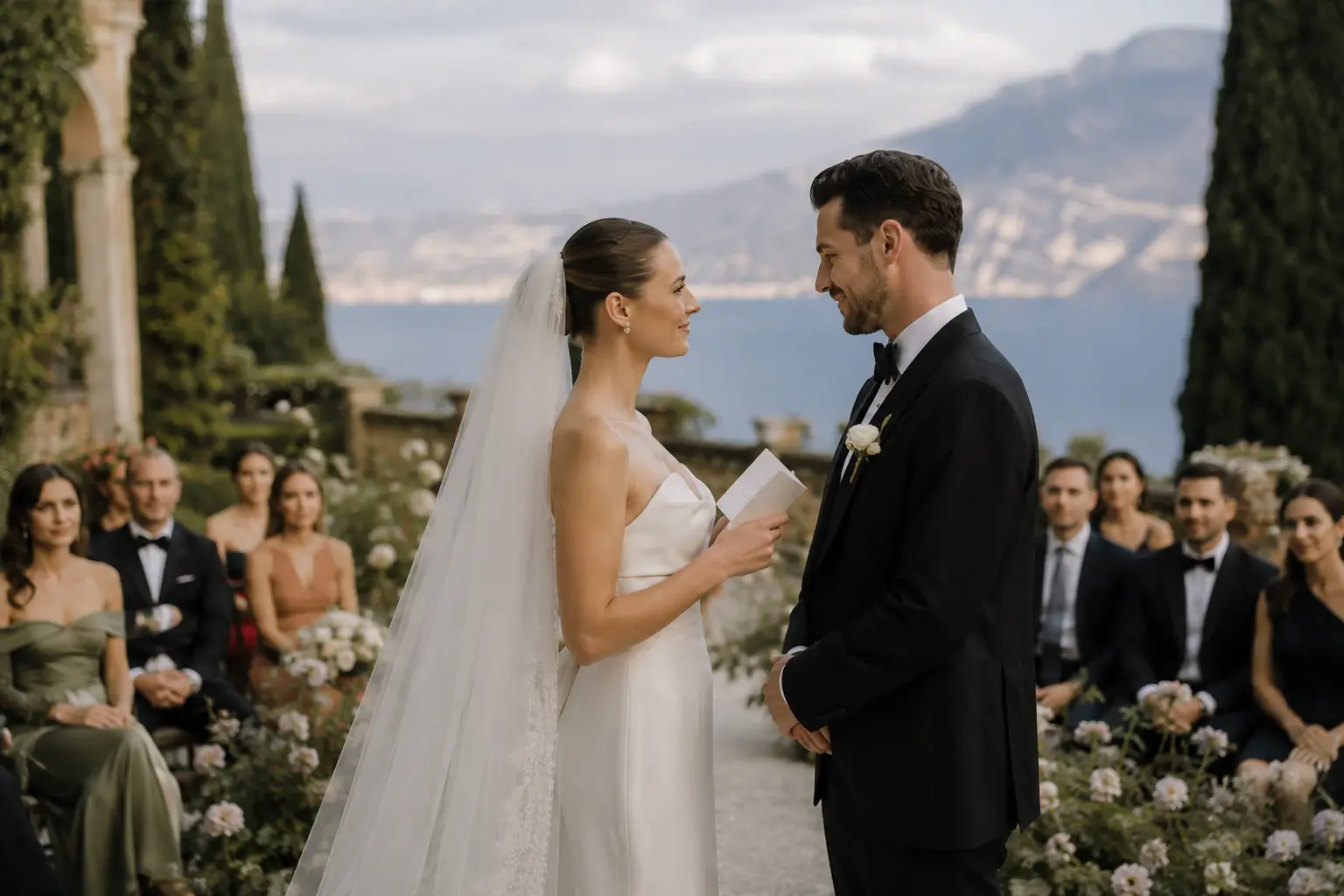
Ceremony time should be considered alongside heat, light, guest comfort and the orientation of the venue.
A later ceremony may bring softer conditions during warmer months, but dinner timing and sunset also need to be considered.
For an outdoor ceremony, think about:
whether guests will face direct sunlight;
shade and access to water;
comfort for children and older guests;
wind around the lake;
microphones and sound;
the distance from guest accommodation;
an indoor or covered alternative.
A beautiful view matters, but comfort affects how everyone actually experiences the ceremony.
International couples must also decide whether they want a legal or symbolic ceremony. Our civil wedding in Lake Garda guide explains the difference and the questions couples should ask before choosing.
Protect the moments immediately after the ceremony
Immediately after the ceremony, allow time for genuine reactions.
Parents want to embrace you. Friends want to congratulate you. Guests may be emotional. These moments can become some of the most meaningful photographs in the gallery, but they disappear quickly when the couple is taken away immediately for portraits.
Family photographs can follow, but the list should be intentional.
Ten well-organised combinations may take relatively little time. Thirty spontaneous requests can quietly consume the entire aperitivo.
Prepare the list in advance and ask one person from each family to help gather people. Your photographer can then concentrate on arranging and photographing each group rather than searching for missing guests.
Aperitivo is part of the wedding, not a waiting period
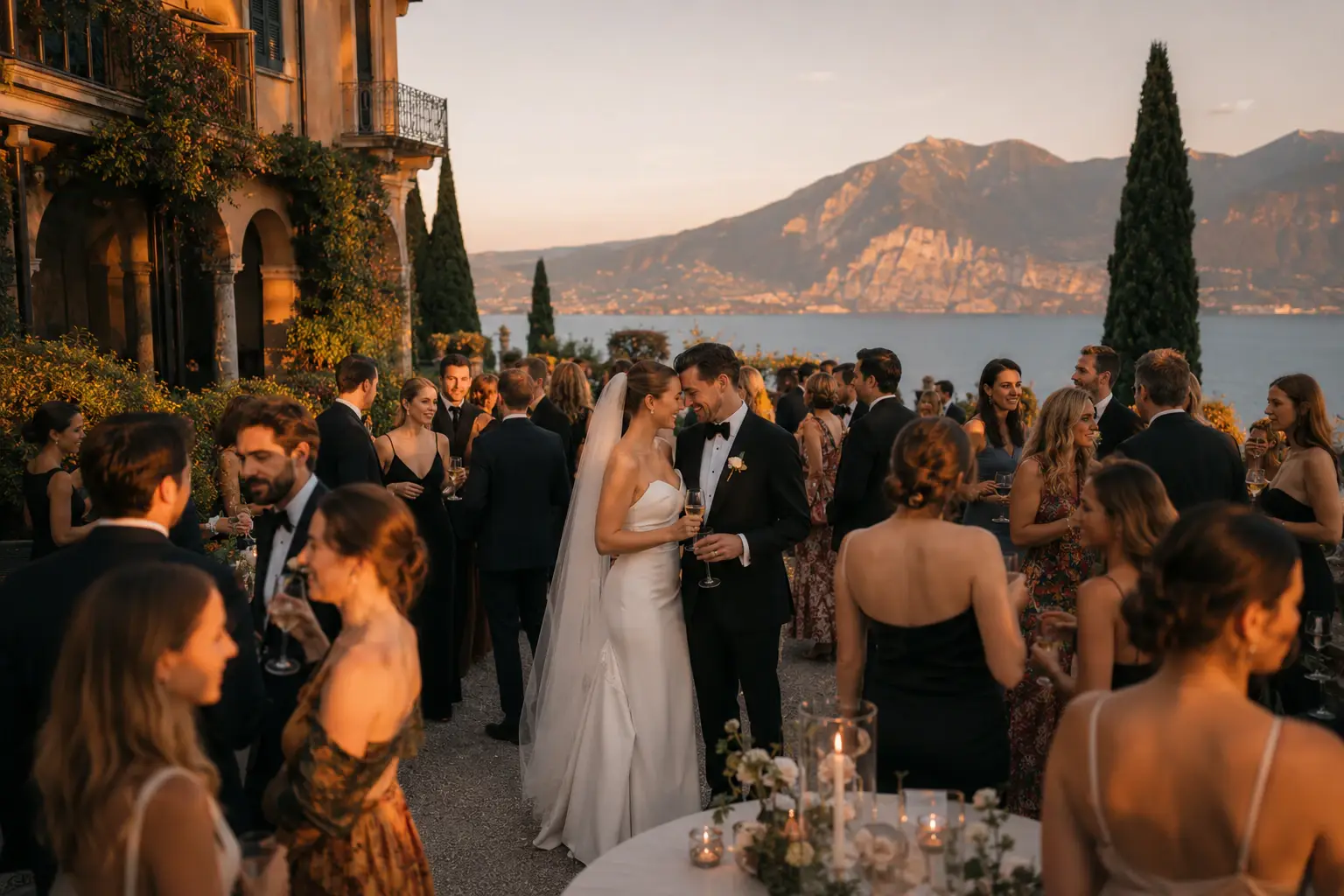
Aperitivo is one of the most social and visually rich parts of an Italian wedding.
Guests are moving, drinking and talking. The formality of the ceremony has ended, but dinner has not yet begun. This often creates some of the most natural photographs of the celebration.
Whenever possible, the couple should experience some of it too.
A long portrait session that removes you from your guests can make the day feel disconnected. Dividing portraits into a few shorter sessions often gives you enough variety without sacrificing the real experience.
For example, you might take twenty minutes of portraits during aperitivo and return for another ten minutes when the evening light becomes softer.
How long should couple portraits take?
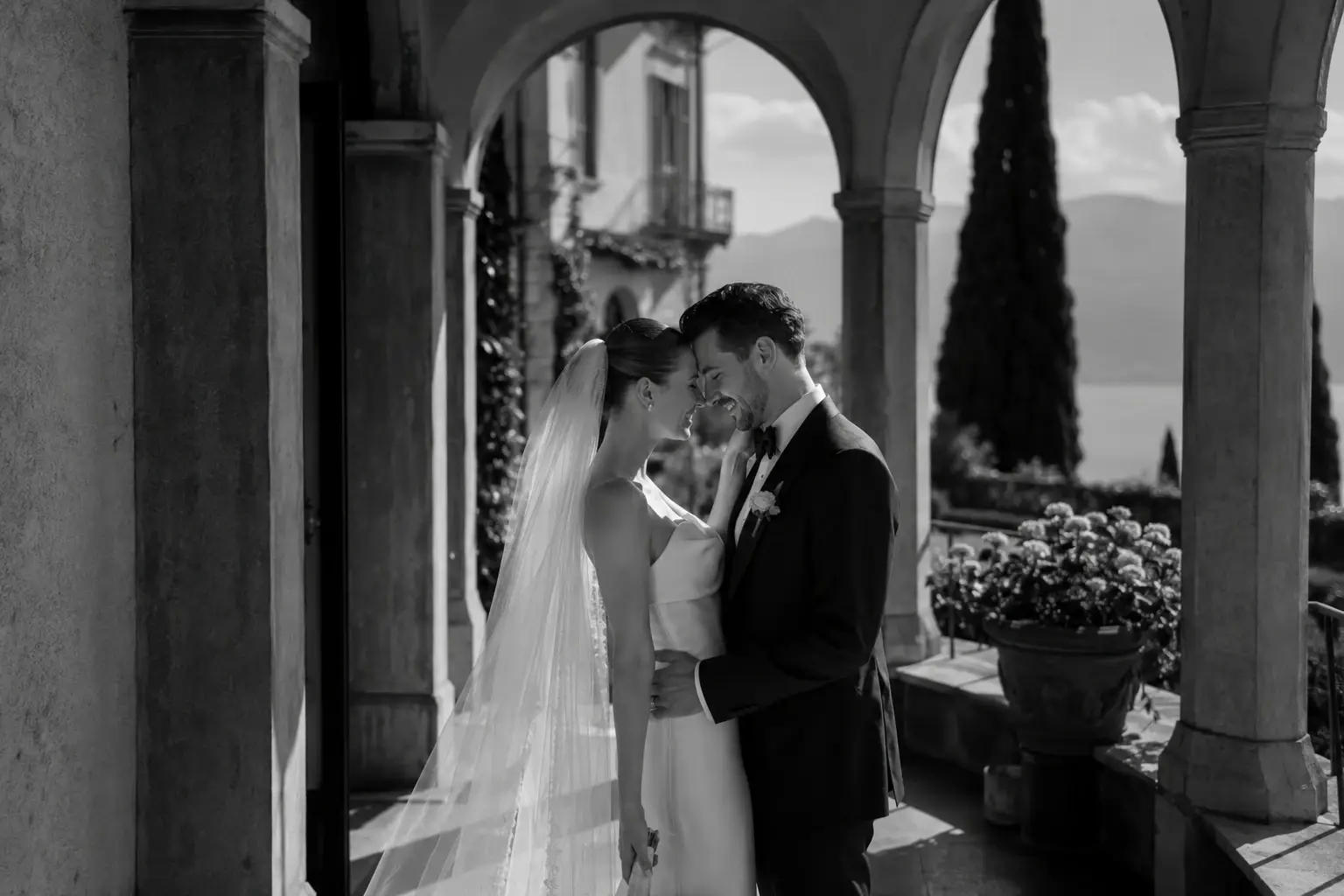
When the venue already offers gardens, architecture or direct lake access, staying nearby may create better photographs and a calmer experience than travelling to several famous locations.
A focused twenty-to-thirty-minute session can provide:
portraits within the landscape;
closer emotional photographs;
movement and natural interaction;
architecture and garden scenes;
lake views;
a few quiet minutes alone together.
If you are considering additional locations, explore our guide to the best wedding photo locations in Lake Garda. The right choice depends less on how famous a place is and more on whether it fits naturally into your day.
Should you include a boat ride on the wedding day?
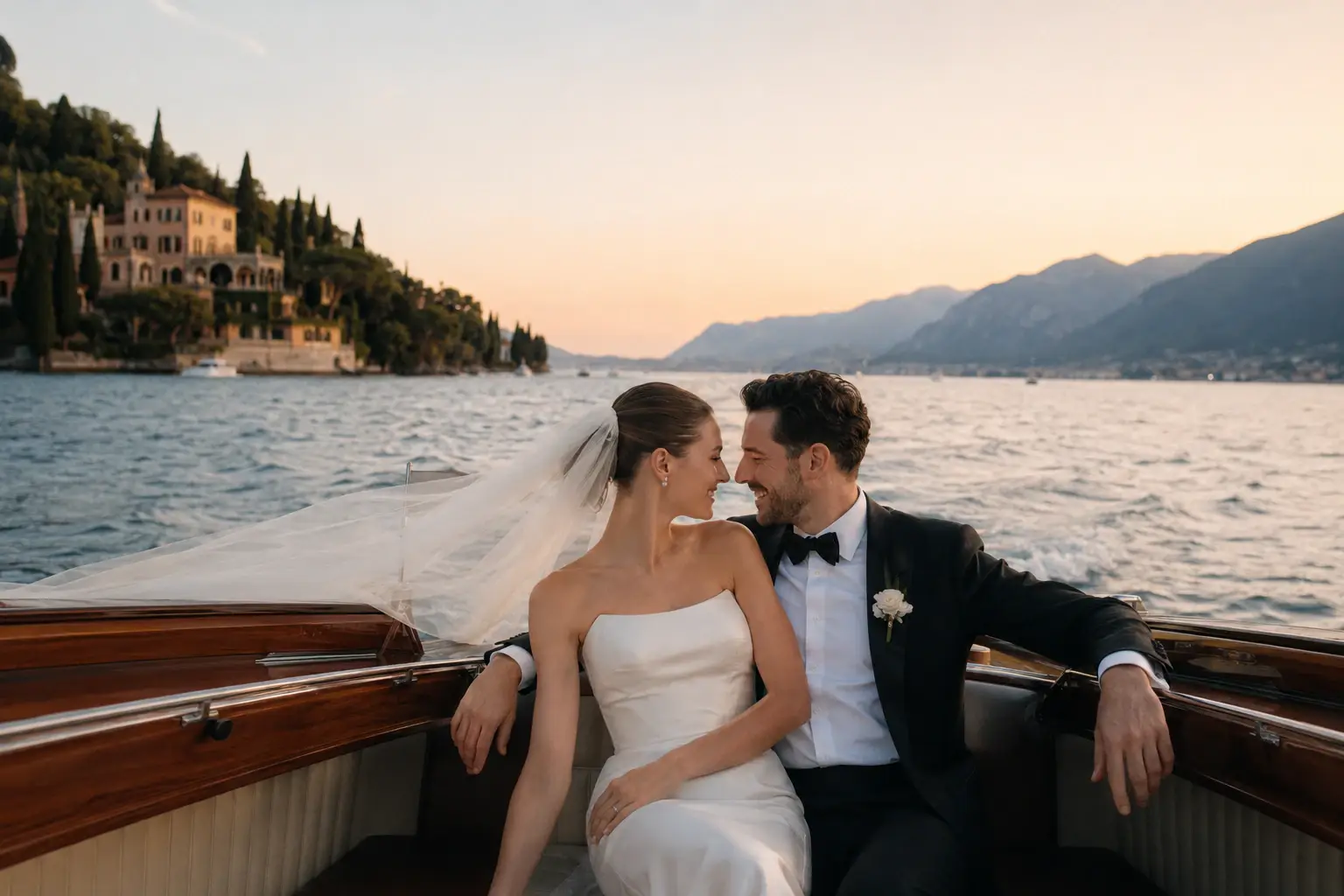
A private boat can add movement, privacy and an unmistakable sense of Lake Garda to the visual story.
But it should be included because you want the experience, not simply because it appears on a destination wedding checklist.
Boat portraits require time for reaching the pier, boarding, disembarking and returning to the venue. Wind, water conditions and delays may also affect the plan.
A boat experience works particularly well when:
the pier is close to the venue;
enough time has been included;
the journey feels like part of the day;
there is a realistic weather alternative;
the couple is comfortable missing part of aperitivo.
When the wedding-day logistics are already complicated, the boat may fit better during the welcome evening or as a separate day-after experience.
Let dinner unfold
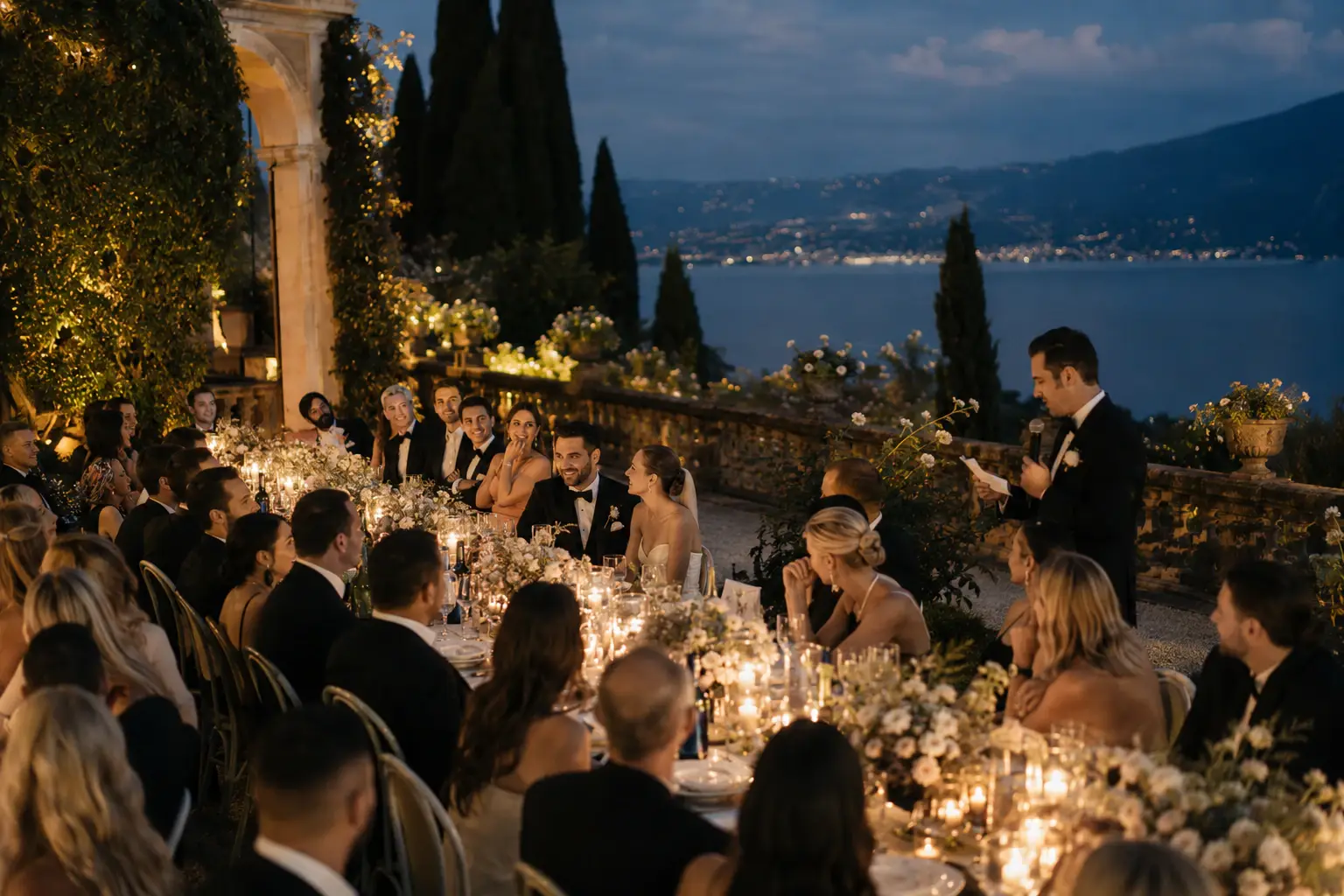
Italian destination wedding dinners often happen over several courses, with speeches and conversations continuing as the light changes.
This slower rhythm can be beautiful, but it should be coordinated carefully with the planner and caterer.
When speeches, entertainment and every food course are placed too close together, the evening can feel managed rather than lived.
Some of the most meaningful moments happen between the scheduled ones:
a parent quietly touching your shoulder;
friends laughing across the table;
children moving between guests;
someone reacting emotionally to a speech;
candlelight gradually changing the room;
the lake becoming darker behind the dinner.
These moments are not interruptions to the design of the celebration. They are the life inside it.
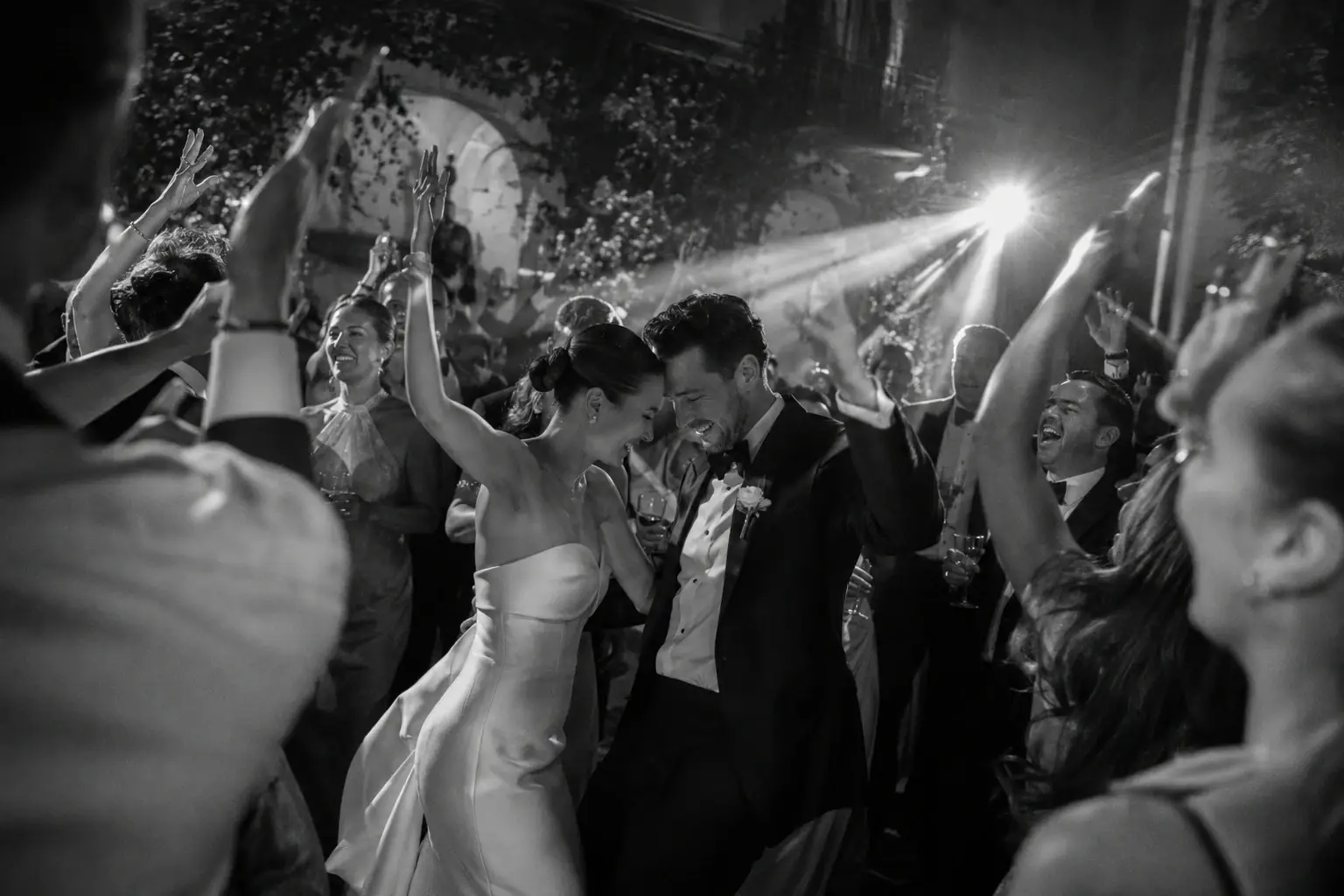
Day three: farewell brunch or a quiet lake day
The morning after the wedding has a very different emotional quality.
The anticipation is gone. Everyone is tired, happy and more relaxed. Guests talk about the previous evening, share photographs from their phones and finally spend time with the couple without the formal structure of the wedding day.
A farewell event does not need elaborate styling or entertainment.
It needs to feel easy.
Option one: a late breakfast or brunch
A brunch at the hotel or venue is often the simplest choice.
Guests can arrive slowly, children can move freely and those who need to travel can leave without feeling trapped in another full event.
A relaxed brunch might begin around 10:30 and continue for two or three hours, with no strict finishing time for guests who are staying longer.
Option two: a poolside lunch
For a summer wedding, a poolside lunch can make the final day feel like part of a holiday.
Keep the structure informal and explain the dress code clearly. Guests may need to check out before the event, so confirm luggage storage, bathrooms and changing facilities with the hotel.
Option three: a Lake Garda boat afternoon
A boat afternoon can work beautifully when the group is smaller and most guests are staying for another night.
Plan it as a genuine guest experience rather than a photo session with other people attached to it.
Consider shade, drinks, accessibility, children, bathrooms, departure points and how everyone will return to their accommodation.
Option four: no official event
A wedding weekend does not become less meaningful because the final morning is unscheduled.
Sometimes the most thoughtful decision is to let guests rest, explore and travel in their own time.
You can still suggest an informal café or meeting point for anyone who wants to join without turning it into another mandatory event.
Where should your Lake Garda wedding guests stay?
Accommodation affects the weekend more than many couples expect.
The most important consideration is not whether every person has the most luxurious room. It is whether the group can move through the celebration without confusion.
Keeping guests in one property
Having everyone in one hotel can create a strong sense of community.
People see one another at breakfast, share transport and naturally continue conversations beyond the planned events. It can also make welcome gifts, updates and departures much easier to manage.
This works especially well when the venue has accommodation or a nearby hotel can host most of the group.
Using two or three nearby hotels
For a larger guest count or a range of budgets, two or three accommodation options may be more realistic.
Try to keep them within the same town or along one shuttle route.
Too many scattered hotels can lead to longer transfer schedules, higher costs, delayed departures and confusion about pickup points.
Letting everyone book independently
Complete freedom may sound easier, but it can create logistical problems later.
Even when guests make their own reservations, give them a small selection of recommended hotels or areas. This provides flexibility while protecting the overall structure of the weekend.
Transport is part of the guest experience
For a destination wedding, transportation is not simply a practical detail. It influences how relaxed the celebration feels.
Guests should understand:
where they need to be;
when they need to leave;
whether they can walk;
whether a shuttle is provided;
where the pickup point is;
how they will return after the party;
what happens if they miss the transport;
whether any part of the journey involves a boat.
Where possible, avoid asking guests to drive themselves to the wedding.
Parking can be limited, roads may be unfamiliar and alcohol naturally becomes a consideration later in the evening.
A well-organised shuttle gives the event a clear beginning and end while allowing guests to enjoy the celebration fully.
How much photography coverage does a wedding weekend need?
Not every event needs to be photographed from beginning to end.
Multi-day coverage should be designed around the parts of the weekend that hold meaning for you.
Wedding day only
Wedding-day-only coverage may be right for couples who want the ceremony, portraits, dinner and party documented but prefer the surrounding events to remain private.
It can also work when the welcome gathering is extremely informal or the final morning is intentionally unplanned.
Welcome dinner and wedding day
This is one of the most balanced options for an international destination wedding.
The welcome evening introduces the people and atmosphere. The wedding day then becomes the emotional centre of the story.
Together, the two events create a more complete record without requiring full photography coverage across three days.
Full three-day storytelling
Coverage of the welcome event, wedding day and farewell gathering can work beautifully when:
guests are travelling from many countries;
family relationships are central to the celebration;
each event has a different atmosphere;
the weekend includes meaningful activities;
the couple wants the final gallery or film to feel like one complete journey.
Coverage does not need to be equally long on every day.
It might mean three hours during the welcome dinner, a full wedding day and two relaxed hours at brunch. The aim is not to manufacture more content. It is to preserve the emotional shape of the experience.
For a clearer understanding of pricing and what affects a quotation, read our guide to Lake Garda wedding photographer costs.
Photography and film for a multi-day Lake Garda wedding
Photography and film preserve different parts of a wedding.
Photography can hold gestures, expressions, visual layers and brief moments that may become more meaningful over time.
Film preserves movement, voices, music, speeches and the changing energy of a room.
For a multi-day wedding, using both can be particularly powerful because each event brings something different.
The welcome evening may contain the first reunions. The ceremony brings vows and emotion. The reception brings speeches, music and movement. The following morning carries the warmth and gentle aftermath of everything that happened.
A consistent photography and film team can follow those changes while maintaining one visual and emotional language throughout the weekend.
When choosing your team, look beyond individual dramatic images. A destination wedding photographer should also be able to document guests, transitions, difficult light, changing weather and the quieter parts of the experience. Our guide to choosing a Lake Garda wedding photographer explains what to look for when comparing portfolios and approaches.
From weekend plans to coverage
Compare Lake Garda photography and film collections, then ask about documenting your full wedding weekend. Share which events matter to you—welcome gathering, wedding day, farewell plans or all three—so the recommendation reflects the shape of your celebration.
Common mistakes when planning a Lake Garda wedding weekend
Planning too many activities
Your guests do not need to be entertained every hour.
Leave room for swimming, resting, exploring, changing clothes slowly or simply sitting somewhere beautiful.
Free time is not an empty space in the itinerary. For many guests, it is part of why travelling to Italy feels special.
Moving between too many areas
Lake Garda offers many remarkable locations, but your wedding weekend does not need to include all of them.
Choosing one central area usually creates a more comfortable and coherent experience than asking guests to travel around the lake repeatedly.
Underestimating transitions
Boarding buses and boats, gathering groups and travelling through busy towns can all take longer than expected.
Include these transitions in the schedule rather than treating them as invisible time.
Prioritising photographs over the experience
The landscape should support the wedding, not take it over.
You do not need to leave your guests for hours to prove that you were married at Lake Garda. A few carefully chosen portrait moments can create a strong sense of place while still allowing you to live the celebration.
Creating a weekend that feels like a conference
Detailed planning is valuable, but your guests should not feel as though they are following a corporate programme.
Communicate the essential information clearly and allow the rest to feel light.
Forgetting the weather alternative
Lake Garda can offer extraordinary outdoor settings, but every ceremony, dinner and boat plan should have a realistic alternative.
A backup plan should not feel like an emergency solution discussed for the first time when the weather changes. It should be a location you genuinely feel comfortable using.
A simple Lake Garda wedding weekend checklist
Before finalising your plans, confirm:
the main area of Lake Garda where the weekend will happen;
guest accommodation or recommended hotels;
airport and train information;
transfers between every essential location;
ceremony and dinner timing;
the indoor or wet-weather alternative;
whether boat travel is essential or optional;
accessibility for children and older guests;
the welcome-event format;
whether there will be a farewell event;
photography and film coverage for each day;
who will communicate schedule changes to guests.
You may also find our complete Lake Garda wedding cost guide helpful when deciding how to divide your budget between venue, accommodation, catering, transport, planning and photography.
The strongest plans are often the clearest ones.
Final thoughts
A Lake Garda wedding weekend should not feel like three wedding days placed one after another.
It should feel like one experience unfolding gradually.
The first evening allows everyone to arrive. The wedding day holds the main emotions and traditions. The following morning gives the people you love a little more time together before the journey ends.
The setting brings beauty, but the rhythm is what allows that beauty to be felt.
When there is enough space in the plan, you can notice the lake changing colour, sit through aperitivo, hear the full speech, speak to the people who travelled for you and move through the weekend without constantly wondering what needs to happen next.
That sense of presence is often what makes a destination wedding feel truly memorable.
Lake Garda wedding weekend FAQ
Questions about planning a Lake Garda wedding weekend
Is a two-day or three-day Lake Garda wedding better?
Yes. A Lake Garda wedding can fit within one weekend. Two days work well for a welcome evening followed by the main celebration. Three days create more room for a farewell brunch or relaxed final activity and may suit guests travelling from several countries. Neither format is automatically better. Consider travel times, accommodation, budget and how much structure your guests will genuinely enjoy.
When should guests arrive for a Lake Garda wedding weekend?
Guests should arrive early enough to check in, rest and absorb a reasonable travel delay before the first organised event. When welcome drinks begin in the evening, an afternoon arrival may work for shorter journeys. Guests travelling long distances, changing flights or travelling with children may feel more comfortable arriving the previous day. Base the recommended arrival time on the actual transfer route rather than the flight schedule alone.
Do you need a welcome dinner for a destination wedding?
No. A welcome event can be a seated dinner, a relaxed aperitivo, drinks in a garden or an informal gathering at the hotel. Its purpose is to help guests arrive, meet and understand the rhythm of the weekend. If most guests are arriving late or at different times, an optional gathering may feel more thoughtful than a formal dinner everyone is expected to attend.
Where should guests stay for a Lake Garda wedding?
Whenever possible, guests should stay in the same hotel, the same town or a small group of nearby properties. Keeping accommodation concentrated makes transport, communication and the overall guest experience much easier.
When several hotels are needed, try to choose properties along the same shuttle route instead of spreading guests across distant parts of the lake.
Is a boat ride necessary for a Lake Garda wedding?
No. A boat ride can be beautiful, but it is not essential. It works best when the pier is close, enough time has been allowed and the couple genuinely wants the experience.
If the wedding day is already full, the boat may be better during the welcome event or as a separate day-after activity rather than making the main celebration feel rushed.
Should we have photography at the welcome dinner?
Welcome dinner photography can be especially meaningful because it documents guests arriving, reuniting and meeting before the formal wedding day begins.
Even two or three hours of relaxed documentary coverage can make the final gallery feel like the story of the complete destination experience rather than only the ceremony and reception.
How should photography coverage be split across a Lake Garda wedding weekend?
The wedding day usually needs enough coverage for getting ready, the ceremony, family photos, couple portraits, aperitivo, dinner, speeches and part of the evening celebration. Shorter coverage can then be added for the welcome dinner or farewell brunch. The right balance depends on transfers, guest count and how much of the full experience you want documented.
Lake Garda photo and film
Planning a wedding weekend in Lake Garda?
If you want the full experience documented through natural photography and emotional film, we would love to hear what you are planning.
We photograph and film Lake Garda weddings with a relaxed, documentary and cinematic approach, preserving the people, atmosphere and quiet transitions without making the celebration feel staged.