
Wedding planning guide
Lake Garda Wedding Timeline: How Many Hours of Photography Do You Really Need?
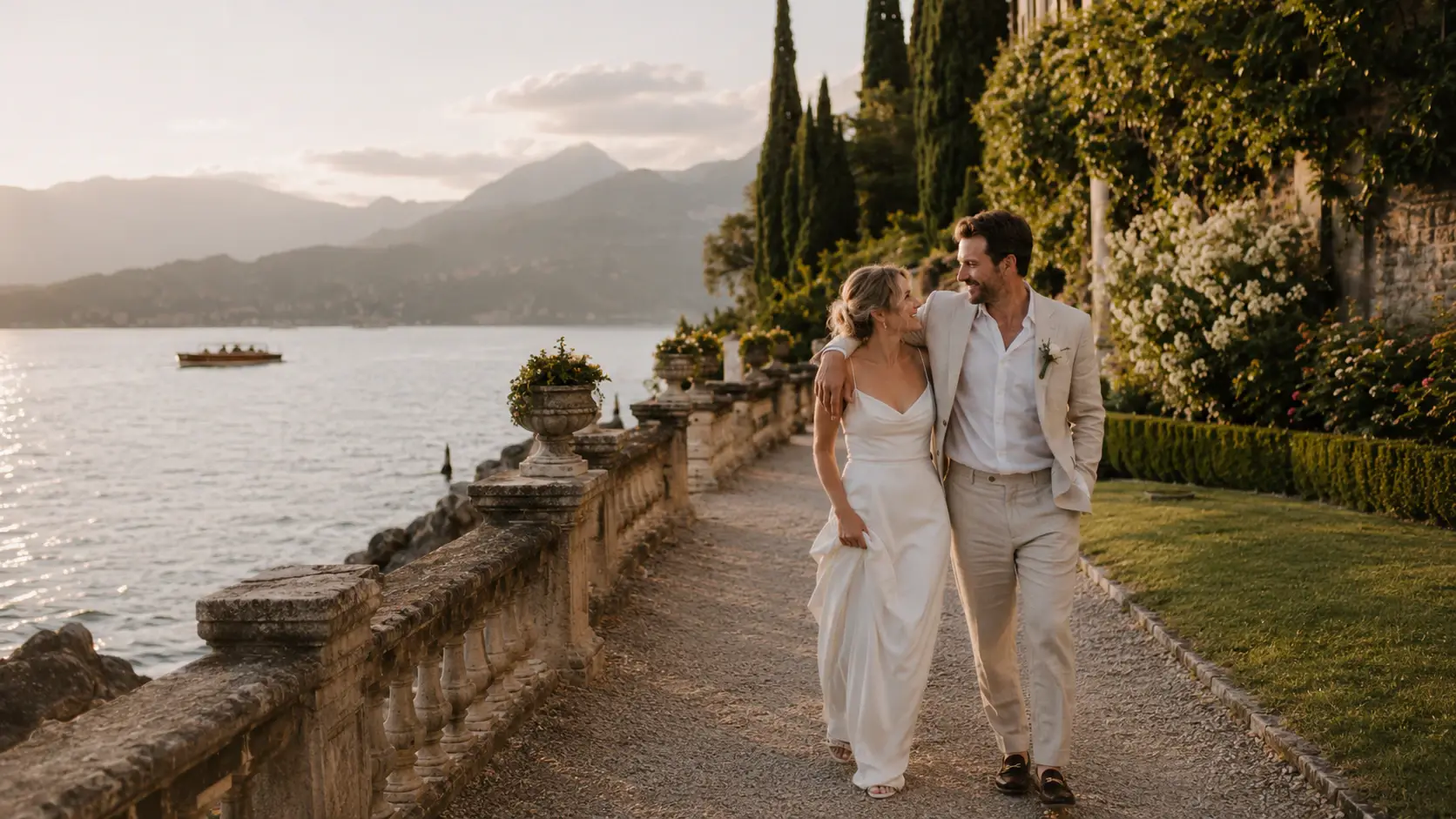
Planning a Lake Garda wedding timeline can feel surprisingly hard at the beginning.
You may already know where you want to get married. You may have fallen in love with a villa, a lakeside terrace, a castle, a private island or a hotel with mountain views. But then the practical questions begin.
What time should the ceremony be?
How long do portraits really take?
Do you need boat photos?
Should you photograph getting ready?
Is 4 hours enough?
Is 8 hours too much?
What happens if dinner starts late?
The truth is that the best Lake Garda wedding timeline is not the one that fits the most things into the day. It is the one that gives you enough space to actually experience it.
Lake Garda is a beautiful place to get married because it gives you water, mountains, historic towns, gardens, villas and a softer Italian atmosphere than some more crowded wedding destinations. But that beauty needs time. If the day is too rushed, the photos can start to feel like a list of locations instead of a real memory.
If you are looking for a Lake Garda wedding photographer, this guide will help you understand how many hours of photography you may need and how to plan a timeline that feels natural, emotional and easy to live inside.
Why your Lake Garda wedding timeline matters so much
A wedding timeline is not only a logistical document. It shapes the feeling of the whole day.
When the timeline is too tight, the day can feel like you are always slightly late. Getting ready becomes rushed. Portraits feel pressured. Family photos take longer than expected. Guests wait. Aperitivo gets shortened. Dinner starts with everyone already tired.
And the photos usually show that.
A relaxed timeline does not mean doing less. It means giving each part of the day enough breathing room so the moments can unfold naturally. This is especially important in Lake Garda, where the best images often happen between the “main” events.
A parent seeing you fully dressed for the first time.
Guests arriving with the lake behind them.
A quick laugh during the ceremony.
A windy moment by the water.
Someone wiping tears during speeches.
The two of you walking back to dinner with a little messy hair and real smiles.
Those moments are hard to force. They need space.
If you want a deeper guide on building a timeline around natural photos in general, you may also like How to Plan a Wedding Timeline for Natural Photos.
The biggest timeline mistake couples make in Lake Garda
The biggest mistake is trying to treat Lake Garda like a simple local wedding.
Destination weddings usually need more buffer time. People are moving in unfamiliar places. Transfers may take longer. Boats can be affected by weather. Guests may need help finding the ceremony location. Hair and makeup may run late. The light changes quickly near the lake and mountains. Some venues have stricter access or setup rules.
None of this should scare you. It just means the timeline needs to be honest.
A beautiful Lake Garda wedding does not need to feel complicated. But it does need realistic timing. The goal is not to photograph everything possible. The goal is to protect the emotional rhythm of the day.
If you are still choosing where to get married, our guide to the best Lake Garda wedding venues can help you understand how different venues shape the flow of the day.
How many hours of photography do you need for a Lake Garda wedding?
The right number of hours depends on the size of your wedding, the number of locations, the ceremony time, whether you want getting ready photos, whether you want dinner covered and how much of the atmosphere you want to remember.
As a general guide, a very small elopement or civil ceremony can work with 3 to 4 hours. An intimate wedding with ceremony, portraits, family photos and part of aperitivo usually feels better with 5 to 6 hours. A full wedding day with getting ready, ceremony, portraits, aperitivo, dinner and speeches usually works best with 8 to 10 hours. For a larger destination wedding, multi-location day, boat transfer or late evening celebration, 10 to 12 hours may make the story feel more complete.
The question is not just “how many hours will the photographer be there?” It is “which parts of the story would feel painful to miss?”
If you are planning a smaller celebration rather than a full wedding weekend, our Lake Garda elopement guide can help you think through guests, vows, boats, weather and the amount of coverage that feels right.
Example timeline
A relaxed 8 hour Lake Garda wedding timeline
This example works well for an intimate Lake Garda wedding where everything happens at or near the same venue, with getting ready, ceremony, portraits, aperitivo and the beginning of dinner all included in the story.
Getting ready begins
Photography starts with the atmosphere of the place, final beauty moments, details and the quiet anticipation before guests arrive.
Final preparations
Dress, accessories, family moments and a few calm portraits before the day becomes more public.
First look or quiet portraits
A private moment together can make the rest of the timeline feel easier, especially if you want to enjoy more of aperitivo with your guests.
Ceremony by the lake
A late afternoon ceremony usually gives softer light, a more comfortable experience for guests and a natural transition into aperitivo.
Congratulations and family photos
Hugs, candid reactions and a focused family photo list help keep this part emotional instead of rushed.
Couple portraits
A short portrait session around the venue or lakefront is usually enough when the location already has strong atmosphere.
Aperitivo and guest moments
This is one of the best parts of the day for documentary photos, with guests relaxed, talking, drinking and settling into the celebration.
Dinner begins
Reception details, speeches and the beginning of the evening give the gallery a fuller sense of atmosphere and story.
3 to 4 hour Lake Garda elopement timeline
A shorter timeline can work beautifully for a small elopement, civil wedding or symbolic ceremony with very few guests. This is best when everything happens close together and you do not need extended dinner or party coverage.
A 4 hour timeline could start with final getting ready details or arrival at the ceremony location, followed by a first look or quiet portraits before the ceremony. After the ceremony, there would be time for congratulations, a few family photos, couple portraits around the venue or nearby lakefront, and perhaps a short aperitivo moment before photography ends.
This kind of timeline is best for couples who want the essential story: the ceremony, the emotion, a few portraits and the feeling of the location.
It is not ideal if you want getting ready covered properly, boat photos, dinner atmosphere, speeches or a slower documentary feeling. It can be beautiful, but it needs to stay simple.
5 to 6 hour intimate Lake Garda wedding timeline
For many smaller destination weddings, 5 to 6 hours is the first option that starts to feel more complete.
It gives you enough time for the ceremony, portraits, family photos and a good part of aperitivo without rushing too much. It can also include a little getting ready coverage if everything is close together.
A 6 hour timeline could begin with getting ready, details and atmosphere. From there, you may have time for final preparations, a first look, the ceremony, congratulations, family photos, couple portraits and a relaxed aperitivo. Depending on dinner timing, photography may also include reception details before guests sit down.
This timeline works well if you want the day to feel natural but do not need late evening coverage. It gives space for real moments, but it still leaves some parts of the story uncovered.
If speeches, candlelit dinner, cake or first dance are important to you, I would consider longer coverage.
8 hour Lake Garda wedding timeline
For many Lake Garda weddings, 8 hours is the most balanced option.
It usually allows photography to begin during getting ready and continue through dinner or the beginning of the evening. This is often enough for couples who want a full story but are not planning a very late party or multiple separate locations.
An 8 hour timeline usually gives space for getting ready, final preparations, a first look if you choose one, ceremony, congratulations, family photos, couple portraits, aperitivo, reception details and part of dinner.
This is a strong option for couples who want getting ready, ceremony, portraits and a real sense of the celebration. It also gives enough time for the gallery to feel human, not just pretty.
For most couples, 8 hours is the point where the wedding story starts to breathe.
10 hour Lake Garda wedding timeline
If you are planning a full destination wedding, 10 hours is often the most comfortable choice.
This is especially true if you have a larger guest list, a more designed dinner, speeches, a boat moment, a first dance or a venue where movement between spaces takes time.
A 10 hour timeline can include the full getting ready story, portraits before the ceremony, the ceremony itself, congratulations, family photos, a short couple session or boat moment, aperitivo, dinner details, speeches and some evening atmosphere.
This kind of timeline works very well if you care about documentary coverage. It gives time for the obvious moments and the unexpected ones.
It also means the gallery will feel more like a full wedding story, from anticipation to evening atmosphere.
12 hour Lake Garda wedding timeline
A 12 hour timeline is best for larger weddings, multi-location celebrations, full dinner and party coverage, or weddings where the couple wants the gallery to feel like a complete documentary of the day.
It is also useful if your day includes boat transfers, separate getting ready locations, a long ceremony, extended aperitivo, a formal dinner, speeches, cake cutting, first dance and open dance floor.
This is the timeline I would recommend when you want the full feeling of the day preserved, especially if the wedding has many moving parts.
Should you include getting ready photos?
For most destination weddings, yes.
Getting ready photos are not only about makeup, the dress or flat lay details. They create the emotional beginning of the story.
This part of the day often holds some of the quietest, most personal moments: nervous laughter, parents entering the room, friends helping with buttons, someone reading vows alone, the feeling of the place before the guests arrive.
For Lake Garda, getting ready can also show the destination beautifully. A window with lake light. A hotel room near Sirmione. A villa bedroom with old shutters. A quiet moment before the day becomes full.
If your coverage is very short, getting ready may not be essential. But if you are booking 8 hours or more, I would usually include it.
Should you do a first look?
A first look can be very useful for a Lake Garda wedding, especially if your ceremony is later in the day or if you want more time with guests after the ceremony.
It can help you complete some portraits before the ceremony, which makes aperitivo more relaxed. It also gives you a private emotional moment before everything becomes public.
But it is not for everyone.
Some couples really want the first time they see each other to be at the ceremony. That can be beautiful too. The right choice depends on what feels more meaningful to you.
If you do not do a first look, just make sure the timeline gives enough space after the ceremony for portraits, family photos and guest moments without crushing aperitivo.
When should the ceremony happen?
For most Lake Garda weddings, late afternoon works best.
Midday ceremonies can be difficult because the light is stronger and the heat can be uncomfortable, especially in summer. Later afternoon usually gives you softer light, a better transition into aperitivo and a more relaxed feeling for guests.
The exact time depends on the month, location and dinner plan, but many weddings work well with a ceremony around 16:00 to 17:30.
If your ceremony is too late, you may lose time for portraits before dinner. If it is too early, the light may be harsher and the day may feel longer for guests. This is where a realistic timeline makes a big difference.
For a broader Italy planning structure, you can also read Italy Wedding Timeline That Actually Works.
How much time do you need for family photos?
Family photos are important, but they can easily take over the timeline if they are not organized.
For most weddings, I recommend keeping the formal family list focused. Around 8 to 12 combinations is usually manageable. If the list becomes too long, guests get tired and the couple loses time during one of the most emotional parts of the day.
A realistic family photo window is usually 20 to 30 minutes.
The key is to prepare the list before the wedding and ask someone who knows the families to help gather people. That way, the photos feel smooth instead of chaotic.
How much time do you need for couple portraits?
For natural couple portraits, you do not need to disappear for two hours.
In many cases, 25 to 40 minutes after the ceremony is enough, especially if the venue already has beautiful scenery. Lake Garda gives you so much atmosphere that the portraits do not need to be overcomplicated.
I usually prefer shorter portrait windows throughout the day instead of one long session. For example, you can do a few portraits before the ceremony if you choose a first look, a short session after the ceremony and a small evening moment later if the light is beautiful.
This keeps the photos varied while allowing you to stay present with your guests.
Should you include boat photos in your Lake Garda timeline?
Boat photos can be beautiful on Lake Garda, but they need to be planned carefully.
A boat moment can add movement, wind, water, reflections and a strong destination feeling. But it can also create pressure if it is squeezed into a timeline that is already full.
If boat photos matter to you, give them proper space. Do not treat them as a five minute extra. Between walking to the boat, boarding, the actual ride, portraits and returning to guests, the time adds up quickly.
For many couples, the best option is to keep the boat moment short and intentional, or plan it as a separate day-after session if the wedding day is already full.
What about aperitivo?
Aperitivo is one of the most important parts of an Italian destination wedding.
It is also one of the best parts of the day for documentary photography.
Guests are relaxed. People are hugging, drinking, talking, laughing and settling into the celebration. The couple can finally breathe after the ceremony. The day starts to feel alive.
If you care about natural photos, do not make aperitivo too short. Try to protect at least one hour, and ideally a little more if the guest list is larger.
This is where many of the best candid photos happen.
Do you need dinner and evening coverage?
For many Lake Garda weddings, yes.
Dinner is not only about photographing tables. It is about atmosphere. Candlelight, speeches, reactions, glasses being raised, guests leaning into conversation, children falling asleep, parents laughing, friends getting emotional.
If you stop coverage before dinner, the gallery may feel like it ends just when the celebration begins.
That does not mean every couple needs party coverage. But at least some dinner and speech coverage can make the story feel much more complete.
If your venue has a beautiful dinner setup or if speeches matter to you, I would not end photography right before guests sit down.
A relaxed Lake Garda timeline is really about presence
The best timeline is not always the longest one. It is the one that lets you be present.
Some couples need 4 hours because their wedding is simple, intimate and focused. Others need 10 or 12 hours because the day has more emotional chapters and more moving parts.
The right coverage should match the kind of memory you want.
If you want a few beautiful portraits and the ceremony, a shorter timeline may be enough. If you want the full feeling of the day, from getting ready to dinner and evening energy, longer coverage will usually serve you better.
Lake Garda gives you beautiful scenery, but your wedding photos should not only be about the lake. They should be about what it felt like to be there together.
Lake Garda photography & film
Planning your wedding on Lake Garda?
Share your date or season, venue or shortlist, approximate guest count and whether you are considering photography only or photography and film.
You do not need a finished timeline before getting in touch. We will confirm availability and recommend coverage around the light, locations and pace of your day.