
Wedding Photography Advice
Why Documentary Wedding Photography Feels Timeless
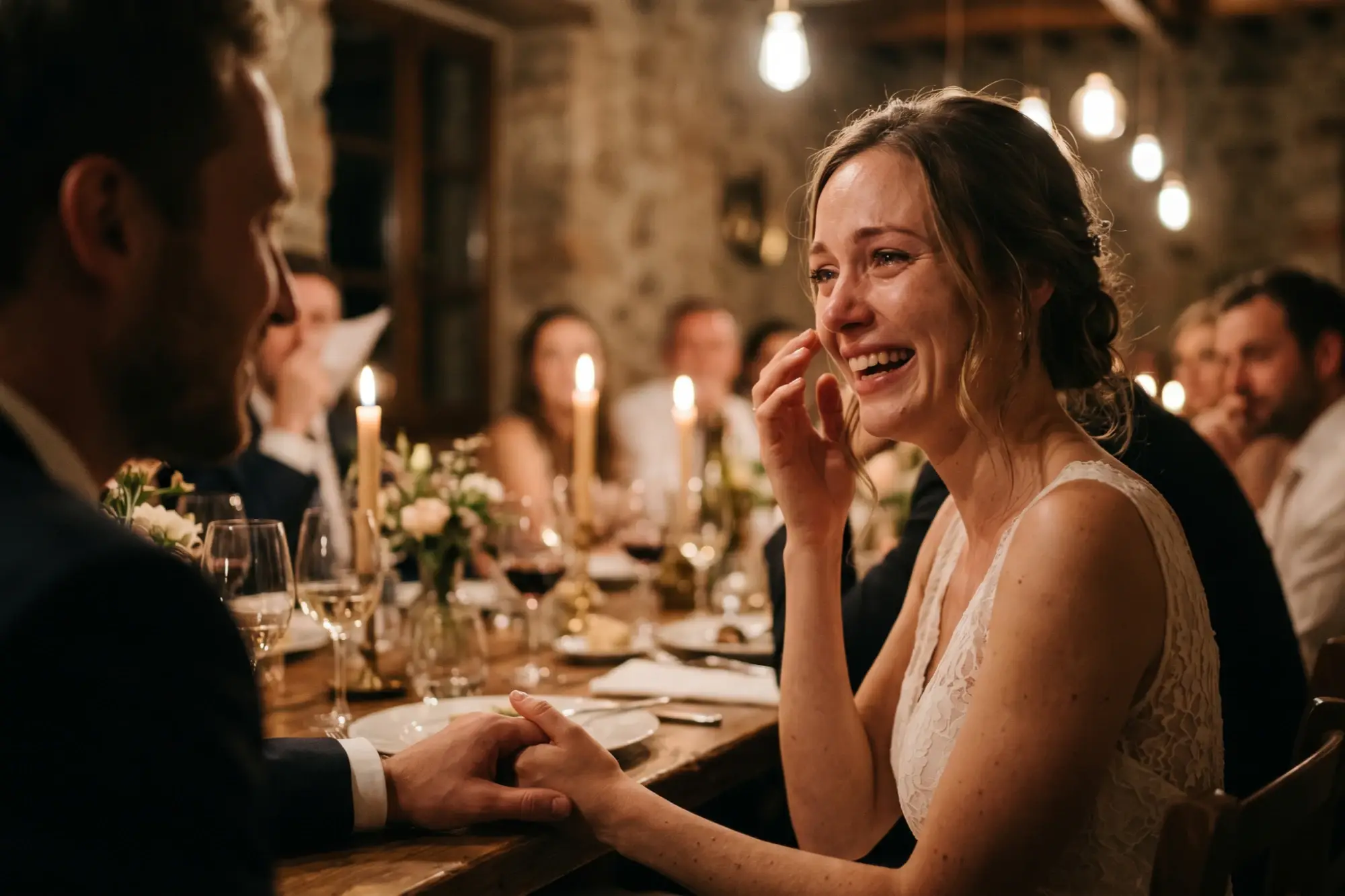
A hand squeezing tighter during the vows. Your best friend laughing through tears during a speech. The quick breath you take before turning the corner and seeing each other. These are the moments couples remember most, which is exactly why documentary wedding photography feels more timeless than traditional posing.
Timeless wedding images are rarely the ones trying hardest to look perfect. They are the ones that still feel true years later. When a photograph holds real emotion, natural body language, and the atmosphere of the day, it ages differently. It does not feel tied to a trend, a pose, or a set of instructions. It feels like memory.
Why documentary wedding photography feels more timeless than traditional posing
Traditional posing has its place. A beautifully lit portrait can absolutely belong in a wedding gallery, and gentle direction often helps couples feel confident. But when every image is built around being camera-aware, something subtle can get lost. The photograph may look polished, yet feel slightly detached from the lived experience.
Documentary wedding photography works from a different starting point. Instead of asking, "How should this look?" it asks, "What is really happening here?" That shift matters more than people often realize. It allows the images to reflect who you were with each other, not just how you were arranged for the frame.
That is what makes the work feel timeless. Real gestures do not go out of style. Genuine emotion does not date in the same way that popular editing trends, stiff compositions, or overly choreographed couple portraits can.
Real emotion ages better than performance
Most couples are not professional models, and they do not want their wedding day to feel like a photo shoot from morning to night. Even couples who love fashion and beautiful editorial imagery usually want to recognize themselves in their photos. They want to look back and feel the day again, not admire a version of themselves that only existed for the camera.
Documentary coverage preserves emotional truth. A parent fixing your outfit with nervous hands. Your partner smiling in a way they only do when they are trying not to cry. Guests thrown fully into the dance floor instead of glancing toward the photographer for approval. These moments carry their own weight because they were not performed.
That emotional honesty is what keeps an image alive over time. Ten or twenty years later, you are less likely to care whether your hand placement matched a trend. You will care that the photo brings you back to how it felt.
The body knows when it is relaxed
There is also a physical difference between candid movement and posed movement. When people are comfortable, their posture softens. Their expressions become more specific. Their interactions stop looking generic and start looking personal.
This matters especially for couples who feel awkward in front of the camera. If you already worry that you will look stiff, too much posing often magnifies that anxiety. You become focused on doing it right, and that pressure can show up in the images.
With a documentary approach, the goal is not to leave you unsupported. It is to create enough calm and trust that you can be yourselves. Sometimes that includes gentle prompts or light guidance, especially during portraits. But the best images usually happen in the spaces around those moments, when you stop performing and start connecting.
Traditional posing can date a gallery faster
The reason traditional posing can feel less timeless is not that posed photos are bad. It is that highly controlled images often reflect the visual habits of a specific era. The more a photograph depends on a fashionable stance, exaggerated expression, or rigid composition, the more likely it is to feel tied to that moment in wedding culture.
Think about older wedding albums where every portrait follows the same formula. Everyone is looking at the camera. Hands are placed in nearly identical ways. Smiles are polite rather than spontaneous. Those photos still have sentimental value, of course, but they often say more about the conventions of the time than about the personalities in the frame.
Documentary imagery tends to resist that problem because it is rooted in observation rather than choreography. Human connection changes less than style rules do. A quiet look exchanged during dinner, a burst of laughter after a small mistake in the ceremony, the way guests gather around you without being asked - these things remain recognizable and moving across decades.
Timeless photos tell the truth about the day
A wedding is not one long portrait session. It is a living sequence of relationships, emotions, movement, sound, and small transitions that give the day its shape. If the photography only focuses on posed highlights, the final gallery can feel incomplete, even if the individual images are beautiful.
Documentary coverage gives context. It shows how the day unfolded, not just how it was staged. That includes the in-between moments many couples do not realize they will treasure until much later: the way your guests reacted, the room before everyone entered, the hands reaching for yours, the relief after the ceremony, the joy that builds slowly and then all at once.
This fuller storytelling is part of why the work feels enduring. It reflects the wedding as an experience, not a checklist of expected images. For couples planning a celebration in places like Lake Como, Lake Garda, Tuscany, or the Dolomites, that sense of atmosphere can be especially meaningful. The landscape matters, yes, but the deeper memory is how you moved through it together.
Timeless does not mean unstyled
There is an understandable misconception that documentary photography means messy, random, or purely observational in a passive way. In reality, the strongest documentary work is deeply intentional. It requires timing, sensitivity, composition, and the ability to anticipate emotion without interrupting it.
A timeless image can be elegant and natural at once. It can be artful without feeling over-directed. That balance is often what couples are really searching for. They want photographs that look refined, but not frozen. Cinematic, but still honest.
This is where experience matters. A calm photographer knows when to step back and when to offer just enough guidance. They understand that some family photos need structure, and some couple portraits benefit from direction. Documentary does not mean never intervening. It means protecting the reality of the day instead of controlling every second of it.
Why this matters even more if you feel camera-shy
If being photographed makes you tense, timelessness is not only about aesthetics. It is also about comfort. When you feel watched all day, your wedding can start to feel less like a celebration and more like a performance. That discomfort often becomes part of the visual story.
On the other hand, when you trust that your photographer is paying attention without demanding constant posing, you settle into the day. You spend more time with your guests. You stay present. You make decisions based on what feels right rather than what will look staged.
The result is not only a more enjoyable experience, but a more honest gallery. The images reflect who you actually were on your wedding day. For many couples, especially those who want to feel safe, seen, and fully themselves, that is the difference between simply having photos and having memories preserved with care.
The trade-off is not posed versus unposed
The real conversation is not documentary good, posed bad. The best wedding photography usually includes both, used thoughtfully. Family groups benefit from organization. A short portrait session can give you beautiful, frame-worthy images with space to breathe. Some couples enjoy a little direction because it helps them relax.
The question is what leads the coverage. If the day revolves around posing, the gallery may look polished but feel less personal. If the day is documented with sensitivity, and direction is used only where it adds value, the photos usually hold up better over time.
That is why documentary wedding photography feels more timeless than traditional posing for so many modern couples. It leaves room for imperfection, personality, and real feeling - the very things that make a wedding worth remembering.
Years from now, you probably will not be searching your gallery for the most technically correct hand position or the trendiest pose. You will be looking for yourselves, your people, and the moments that still feel like home.
Looking for a wedding photographer in Italy?
If you’re planning a wedding in Lake Como, Lake Garda, Tuscany, the Dolomites or elsewhere in Northern Italy, we’d love to help you document the day in a way that feels natural, cinematic and true to you.
You can explore more of our work and wedding guides below:
Northern Italy Wedding Photographer
Lake Como Wedding Photographer
Lake Garda Wedding Photographer
Tuscany Wedding Photographer
Dolomites Wedding Photographer
Italy Wedding Guides
Contact WeddingStudio.se