
Tuscany Wedding Planning
How to Plan a Destination Wedding in Tuscany Without Feeling Rushed
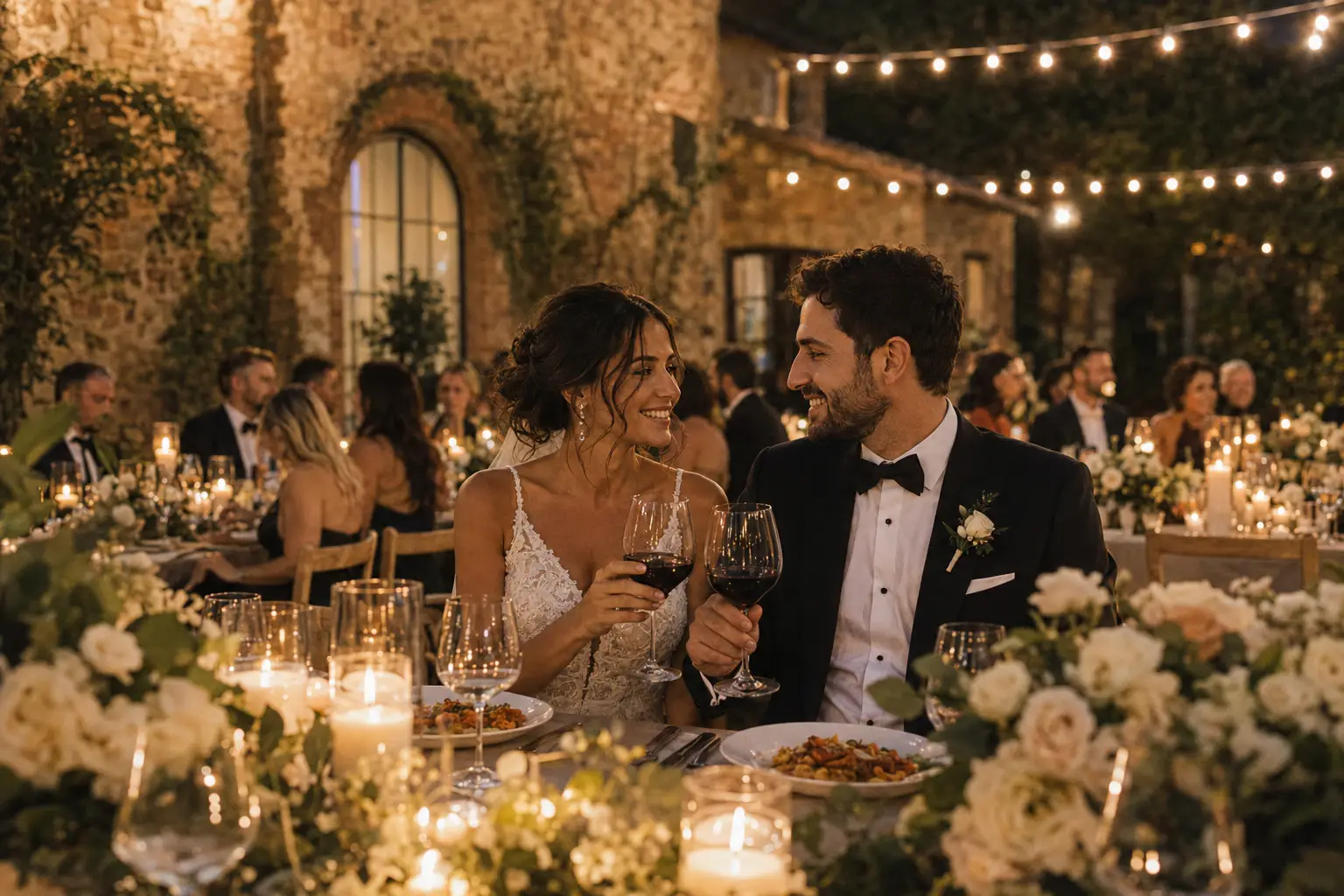
Planning a destination wedding in Tuscany sounds dreamy from the outside. A villa in the countryside, a long table under the lights, wine, olive trees, cypress roads, golden-hour portraits and all your favorite people gathered in one place.
But once you start planning, Tuscany can also feel a little overwhelming.
Which area should you choose? How many hours of photography do you need? Should the ceremony be legal or symbolic? How early should dinner start? Is July too hot? Do you need a planner? How much time should you leave for portraits without disappearing from your guests for too long?
The truth is that a beautiful Tuscany wedding is not only about the venue. It is about rhythm.
The best weddings here usually feel slow, warm and natural. Not because nothing is planned, but because the planning gives the day enough space to breathe.
If you are still choosing where in Tuscany to get married, you may want to start with our guide to the best Tuscany wedding venues for a relaxed, cinematic destination wedding. If you are still thinking about budget, our guide to how much a wedding photographer costs in Tuscany may also help.
This guide is about something slightly different: how to plan a Tuscany wedding day that feels beautiful, emotional and present, without becoming rushed or overproduced.
Start with the feeling, not the schedule
Before you think about exact timings, think about how you want the day to feel.
Do you want a slow morning with your closest friends? A private first look before the ceremony? A long aperitivo where guests can enjoy the view? A candlelit dinner under the stars? A relaxed portrait session at sunset without feeling like you are leaving your own wedding?
These decisions matter because they shape the timeline.
Many couples start planning from a list of events: getting ready, ceremony, family photos, portraits, aperitivo, dinner, speeches, dancing. But in Tuscany, the emotional flow matters just as much as the order.
A wedding in Tuscany usually works best when the day has pauses. Time to walk through the gardens. Time for guests to settle in. Time for dinner to become part of the story. Time for you to actually feel what is happening.
This is very connected to our approach at WeddingStudio.se. We photograph and film weddings in a relaxed, documentary and cinematic way, with gentle guidance when needed, but always with the goal of preserving how the day truly felt.
Choose the right season for the kind of experience you want
Tuscany has a long wedding season, but not every month feels the same.
Spring can be soft, green and romantic. May and early June are especially beautiful if you want longer days, fresh landscapes and a comfortable atmosphere before the strongest summer heat.
July and August can be stunning, but they are also hot. If you are planning an outdoor ceremony in midsummer, shade, water, ceremony timing and guest comfort become very important. A midday ceremony in full sun can be difficult for guests, for makeup, for flowers and for photography.
September is one of the most loved wedding months in Tuscany. The light becomes warmer, the evenings are still beautiful and the atmosphere often feels rich and golden. October can also be wonderful, especially for couples who love autumn tones, food, wine and a slightly quieter feeling. Visit Tuscany highlights autumn as a special season for grape harvest, truffles, mushrooms, chestnuts, mild temperatures and beautiful colors. Visit Tuscany
For most couples, the safest and most comfortable months are usually May, June, September and early October. But the best month depends on your venue, guest experience and the kind of atmosphere you want.
Think carefully about the ceremony
One of the biggest decisions for international couples is whether to have a civil, religious or symbolic ceremony.
A civil wedding in Italy is legally recognized, but the paperwork depends on your nationality, residency and the town hall where the ceremony takes place. Foreign couples who want to marry legally in Italy are usually asked to contact the Italian town hall where they intend to celebrate the wedding to confirm the exact documents required.
A symbolic ceremony is often simpler and more flexible. Many destination couples legally marry in their home country first, then have a symbolic ceremony in Tuscany with personal vows, family involvement and a setting that feels more emotional and less administrative.
There is no right or wrong choice. A civil ceremony may be important if you want the legal marriage to happen in Italy. A symbolic ceremony may be better if you want full freedom with location, wording, timing and emotional flow.
If you are still researching the legal side, you can read our guide to civil weddings in Italy for foreign couples.
Build the day around light
Tuscany is famous for golden light, but that light needs planning.
The most beautiful portrait light usually happens later in the day, especially in the last hour or two before sunset. This is when the hills become softer, the stone turns warm, the shadows get longer and everything feels more cinematic.
If couple portraits are important to you, do not plan them in the harshest midday light unless there is a very specific reason. In summer, the middle of the day can be bright and hot. Your photographer can still create beautiful images, but the feeling will be very different from late-afternoon or golden-hour portraits.
A good Tuscany timeline often protects 20 to 40 minutes around sunset for relaxed portraits. This does not mean disappearing for hours. It means creating a small window where you can step away, breathe, walk through the gardens, hold each other and have a few quiet moments together.
Those portraits often become some of the most emotional images of the day because they are not only about the view. They are about the first moment when everything slows down.
If you are planning around photo and film, you can explore our wedding photography and film packages to understand how coverage length changes the story we can tell.
A realistic Tuscany wedding day timeline
Every wedding is different, but this is a good starting point for a relaxed villa wedding in Tuscany:
12:00 to 14:30, getting ready
This gives space for details, dress, final makeup, candid moments, friends, family and the atmosphere of the morning.
14:30 to 15:00, first look or quiet portraits
Optional, but beautiful if you want a private moment before the ceremony.
16:00 to 16:45, ceremony
In summer, later is usually more comfortable. In spring or autumn, the timing may need to be slightly earlier depending on sunset.
16:45 to 17:30, congratulations and family photos
Do not rush this. The hugs right after the ceremony are often some of the most emotional photos.
17:30 to 18:30, aperitivo
This is one of the best parts of a Tuscany wedding. Guests relax, drink, eat, talk and enjoy the venue. It is also full of candid moments.
18:30 to 19:10, couple portraits
A calm sunset portrait window. This can be shorter or longer depending on your priorities.
19:30 to 20:00, dinner entrance and seating
The transition into dinner often takes longer than couples expect, especially with larger guest counts.
20:00 onward, dinner and speeches
In Tuscany, dinner is part of the experience. Let it breathe.
22:30 onward, cake, dancing or party
This depends on the venue’s music rules and your style of celebration.
This is only a sample, but it shows the most important idea: avoid packing every minute. The more emotional and relaxed you want the day to feel, the more space the timeline needs.
Our Tuscany wedding timeline guide shows how to protect this calm across the full day.
Do not underestimate guest logistics
Tuscany is beautiful, but it is not always simple.
Many villas and estates are in the countryside. Roads can be narrow, taxis may not be easy to find, and guests may be staying across different towns or accommodations.
If many people are traveling from abroad, think carefully about transport. Shuttles can be extremely helpful, especially if guests are drinking, if the venue is remote or if dinner and dancing end late.
Also think about arrival time. Guests may not know the area, may underestimate driving distances, or may struggle with parking. A clear wedding website, shared transport plan and simple arrival instructions can make the day much smoother.
Useful official travel resources include Visit Tuscany, which has regional travel ideas, attractions and itineraries, and Visit Val d’Orcia if you are planning in that area.
Guest comfort also affects the photos. When guests feel calm, welcomed and unhurried, the images usually feel more alive too.
Plan the wedding weekend, not only the wedding day
One of the best things about a Tuscany destination wedding is that it can become a full experience.
Many couples plan a welcome dinner the night before, especially if guests are traveling internationally. This does not need to be formal. It can be pizza, wine, aperitivo, a casual dinner at the venue or a simple gathering in town.
The welcome dinner is often emotionally rich because it is when people first arrive, hug, laugh, reconnect and settle into the wedding weekend. If your budget allows, photographing this evening can add a beautiful layer to your final story.
After the wedding, some couples plan a pool day, brunch, wine tasting or relaxed lunch. This gives everyone time to enjoy Tuscany instead of rushing home immediately after the party.
In Florence, guests can visit the Uffizi Galleries or explore the historic center. In Chianti, a wine tasting or vineyard lunch can be a beautiful pre-wedding activity. In Val d’Orcia, towns like Pienza, Montalcino and San Quirico d’Orcia can be lovely for guests who want slow countryside days.
Decide how much photography and film coverage you actually need
For a small elopement or civil ceremony, two to four hours may be enough.
For an intimate wedding with getting ready, ceremony, portraits and aperitivo, six hours can work.
For a full Tuscany villa wedding, eight to ten hours is usually more realistic. This allows the story to include the morning, ceremony, family moments, aperitivo, portraits, dinner atmosphere, speeches and the beginning of the party.
If you care about dinner, speeches and candlelit atmosphere, do not end coverage too early. Some of the most meaningful images happen after sunset, when people relax, the candles are lit and the wedding starts to feel less formal.
If you are still deciding what level of coverage makes sense, our Tuscany wedding photographer and videographer page explains more about our approach, and our packages page gives you a starting point for photo and film collections.
For the investment side, see our guide to Tuscany wedding photographer costs.
Give yourself space for natural portraits
Many couples worry that portraits will feel awkward. That is completely normal.
The good news is that Tuscany does not need stiff posing. The landscape, light and atmosphere already do so much. Often the best portraits come from very simple things: walking through the garden, holding hands, leaning into each other, taking a breath together, watching the sunset for a moment.
You do not need to perform for the camera.
But you do need a little space in the timeline.
If portraits are squeezed into five rushed minutes between family photos and dinner, they may feel stressful. If you create a calm window, even a short one, the photos can feel much more natural.
Our approach is gentle and relaxed. We guide when needed, but the goal is always that you still feel like yourselves. Real connection photographs better than perfect posing.
Work with vendors who understand destination weddings
Planning from abroad is different from planning locally.
You may not be able to visit the venue multiple times. You may be choosing vendors over video calls. You may be trusting people you have never met in person to shape one of the most important days of your life.
This is why communication matters.
A good vendor team should make you feel calmer, not more confused. Your planner, photographer, videographer, florist, hair and makeup artist, venue team and catering team should understand the reality of destination weddings: time zones, travel, paperwork, guest logistics, language, weather, transport and emotional expectations.
You do not need a huge team. You need the right team.
If you are still early in the process, choosing a planner who knows Tuscany can be incredibly helpful. They can help with venues, contracts, logistics, legalities, suppliers, transport, rentals, weather plans and the thousand small details that are hard to manage from another country.
What couples often forget
Couples often remember the big things: venue, dress, photographer, food, music.
But they forget the small things that affect the feeling of the day.
They forget travel time between getting-ready rooms and the ceremony. They forget that family photos take longer when everyone is emotional and distracted. They forget that guests need shade and water. They forget that walking in heels on gravel takes time. They forget that dinner service, speeches and sunset may overlap. They forget that the most beautiful moments often happen when there is no pressure to move on to the next thing.
This is why the best Tuscany timelines are not overly tight.
A relaxed wedding is not a wedding without structure. It is a wedding where the structure protects the experience.
Final thoughts
A Tuscany wedding does not need to feel rushed.
It can feel slow, warm, emotional and beautifully alive. It can give you space to be present with your people, enjoy the landscape, move through the day naturally and remember more than just how everything looked.
The key is not to fill every moment.
Choose the right season. Protect the best light. Build a realistic timeline. Think about guest comfort. Leave space for dinner. Leave space for emotion. Leave space for yourselves.
Tuscany already gives you the beauty.
The real magic happens when the day has enough room to become a memory.
Tuscany wedding planning
Frequently asked questions
How far in advance should we plan a destination wedding in Tuscany?
For popular dates in May, June, September and early October, many couples start planning 12 to 18 months in advance. If you want a specific venue, planner, photographer or photo and film team, earlier is usually better.
What is the best month for a Tuscany wedding?
May, June, September and early October are often the most comfortable and popular months. July and August can be beautiful, but they are usually hotter, so the timeline and guest comfort need extra attention.
Do we need a wedding planner in Tuscany?
A planner is not legally required, but for destination weddings it can be extremely helpful. A good planner can support you with venues, logistics, suppliers, legal requirements, transport, rentals and the flow of the day.
Should we have a civil or symbolic ceremony in Tuscany?
A civil ceremony is legally recognized, but requires paperwork that depends on your nationality and the town hall where you marry. A symbolic ceremony is more flexible and often easier for destination couples, especially if you legally marry in your home country first.
How many hours of photography do we need for a Tuscany wedding?
For a full villa wedding, 8 to 10 hours is usually a good starting point. For elopements or smaller civil ceremonies, 2 to 4 hours may be enough. If you want dinner, speeches and party moments documented, longer coverage is usually better.
How can we avoid feeling awkward in wedding photos?
Choose a photographer whose approach feels natural and relaxed. You do not need to know how to pose. With gentle guidance, good light and enough time in the schedule, portraits can feel calm, connected and true to you.
Tuscany photography & film
Planning your wedding in Tuscany?
Share your date or season, venue or shortlist, approximate guest count and whether you are considering photography only or photography and film.
You do not need a finished timeline before getting in touch. We will confirm availability and recommend coverage around the light, locations and pace of your day.